History and identity
Since 1941
- Founded
- 1941
- Stadium
- Stade du 18 Novembre
- Division
- Botola Pro 2
The club’s story
Page written by supporters, based on Mohamed Baïchit’s book (2023), RSSSF and the Moroccan press. Only the club’s own announcements are authoritative.
A team from the cooperative
Ittihad Zemmouri de Khémisset was founded in 19411, at the headquarters of the Khémisset grain cooperative. It was then called Sport Khémisset2. Its founders were French people living in and around Khémisset, teachers, farmers, civil servants, soldiers or shopkeepers, along with a few Moroccans, among them Hadj Hammou El Machatt, a co-founder of the club and a player in the team of the 1940s, at a time when the whole town called the cooperative, the Société française marocaine de collecte des céréales, simply “the SCAM”.
The first president was a man called Moralès. He was 25, ran the SCAM’s export department, also coached the team and sometimes even kept goal, and two other Frenchmen, Pierre Martin and Le Roy, took turns with him as president and coach until 1946. The team then took the name Union sportive de Khémisset (U.S.K.). Its opponents were other works teams: Société des céréales de Sidi Slimane, Collecte des céréales de Meknès, Société des céréales de Rabat, Céréales et légumineuses de Sidi Kacem. The war brought it to a halt in mid-1942, and it was playing again by 1943.
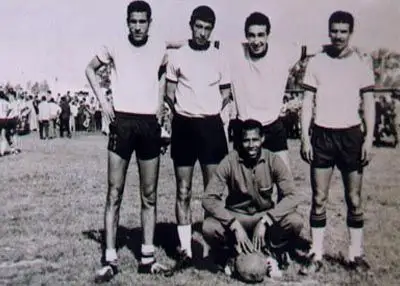
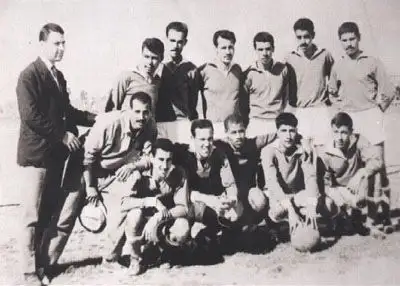
The first Moroccan players arrived in 1944: Ali Benkacem, Essabounji, Driss Benboubker, Benaïssi Ben Driss, Bartout and Driss El Alem. A year later, the club left the Meknès works championship for the works honour divisions of the Rabat region, company championships quite separate from the Division d’honneur of the Ligue du Maroc, the top level at the time, in which U.S.K. did not play. Driss Benboubker, nicknamed “Baqchich” for his speed, wore the Khémisset shirt from 1947 to 1958; it was he, in fact, who wrote out by hand the list of “the first football team of the year 1946/1947”, thirteen names in all. His son Lotfi would be one of the forwards in the side that won promotion in 2000. Matches were played on the SCAM ground. The old-timers call it “Lascam”, and entry was free.
The 1950s were far more turbulent. After the exile of Mohammed V in 1953, the team stopped playing in the works honour division, then started again the following year in the works third division, and beat the French teachers and schoolmasters of the Lycée Moussa Ibn Noussair 4-1 in a friendly. Football stopped again when the king returned. At the end of the 1955-1956 season, following an intervention by the Resistance and the Liberation Army, the khalifa Ahmed El Ghazouani, known as Ahbachane, took over as president for six months and paid both the players and the travel costs out of his own pocket.
The Ittihad Zemmouri name
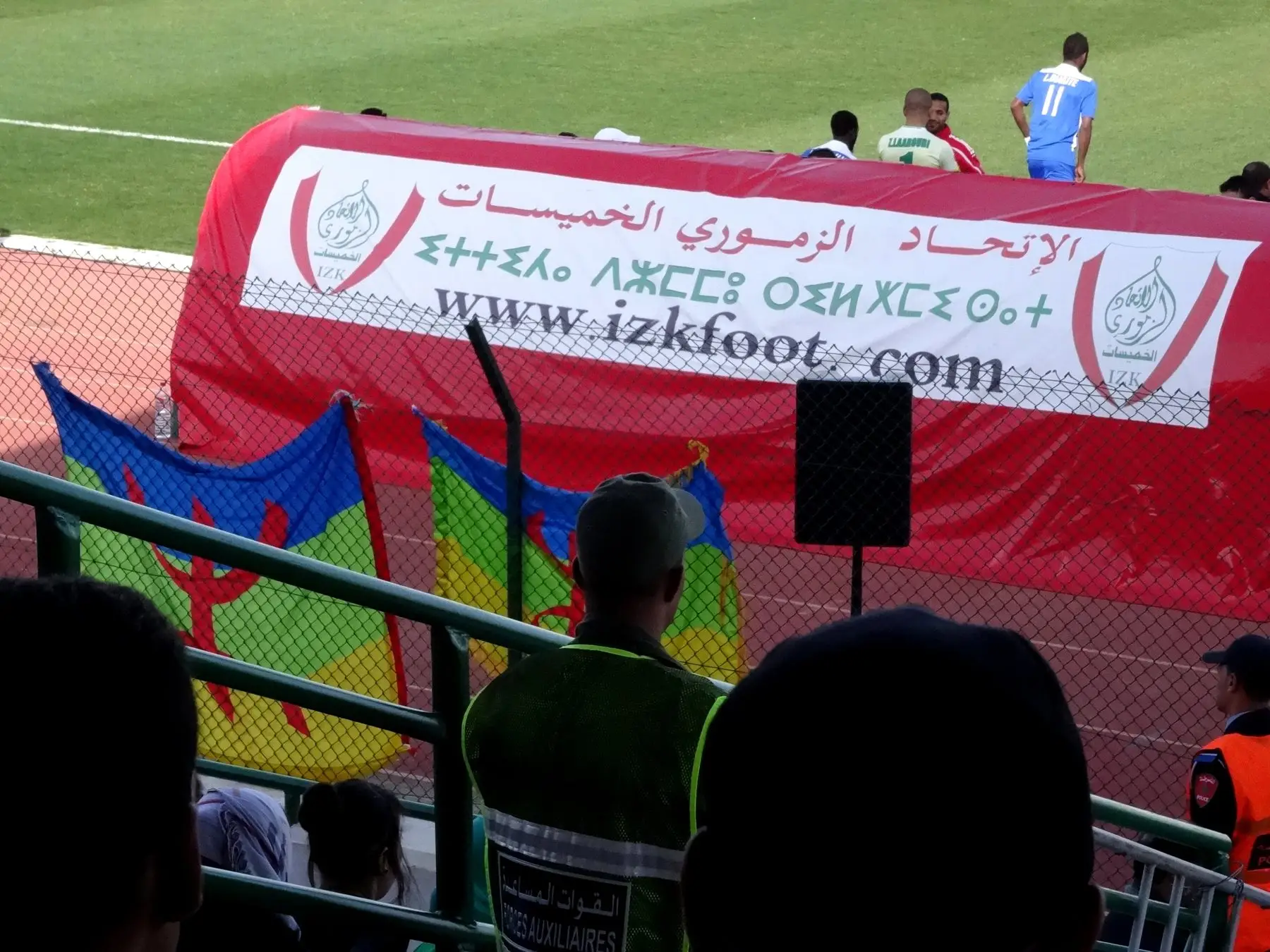
After the founding of the Royal Moroccan Football Federation (FRMF), the presidency of football in Khémisset was entrusted to Hadj Hammou El Machatt, known as “Hbibit”, a former player, head of Civil Protection and, during his career, a governor, at a meeting held in Rabat at the home of the caïd Bouchta; the khalifa Ahmed El Ghazouani became vice-president. El Machatt was thus the club’s first Moroccan president. The name changed under his presidency, for a very simple reason: U.S.K. was being confused with Union sportive de Sidi Kacem, which had the same initials. The S became a Z. That Z is the Z of Zemmour, the name of the whole province, and it was El Machatt who had the name Ittihad Zemmouri registered, before leaving the presidency at the end of the 1950s.
The club joined the FRMF in 1957 and played in the regional honour divisions. That was the year the 20 August Stadium appeared, with no terracing and no stand, a small perimeter wall and admission at one, two or five dirhams, free for women. Resources were thin. A single ball served for training and matches alike, the players paid out of their own pockets and bonuses were very rare. From 1960 to about 1969, everything rested on Mohamed Khalef, the bursar of the Lycée Moussa Ibn Noussair, who recruited the players, sat on the committee, coached the team and, from 1967, even arranged for some players to eat at the school’s boarding house.
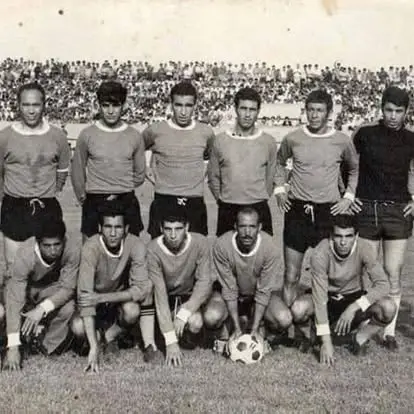
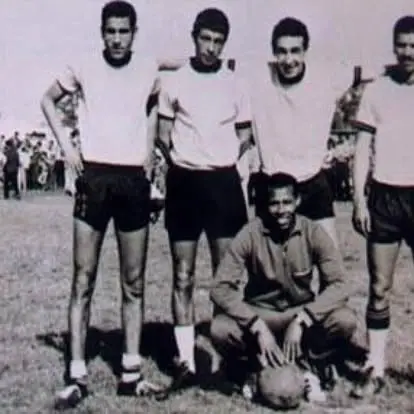
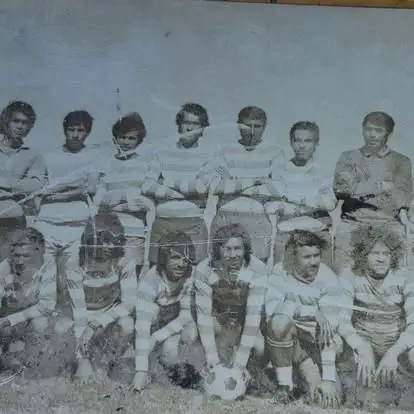
In 1962, IZK won a play-off against Nahda de Tanger, Hassania de Sidi Slimane and Najah de Meknès, with a goal from Hassan Brahim, and were promoted to the second division (D2) for the first time, with M’barek Belouad as president and Mohamed Khalef as coach. The goalkeeper Lahcen Boukhriss, Ahmed Benomar, Ahmed Belbachir, known as “Mikhou”, Moussa Barrhou, Ahmed Tabach and Ezzenati were part of that promotion side. The team finished 6th out of 12 in the North group in 1962-1963, then 5th in 1964-1965, behind Moghreb de Tétouan. Around 1970 a new generation arrived: the goalkeeper Ahmed El Mansouri, Noureddine Belhoucine, Hamid Tabach, Hamid Hattab, Ahmed Bouzbouz, Moulay Haddou.
The 22-0 and promotion
Mahmoud Archane became president in 1969. A young man from Tiflet and a well-known figure in the national police, he paid the travel costs of a team coached by Belaïd Essaghrouchni. The 1969-1970 season in the D2 North group ended in a race between two sides: before the final day, IZK and Barid de Rabat were level on points and were to be separated on goals, and both matches were broadcast live on national radio. IZK won 22-0 in Oujda against Club des fonctionnaires d’Oujda. Barid, for their part, beat Widad de Fès 15-0 in Fez. With 64 points from 26 matches (15 wins, 8 draws, 3 defeats, 65 goals scored, 20 conceded), IZK finished first, ahead of Barid on goal average, 3.25 to 2.83.
The clubs placed below them lodged a complaint. The FRMF suspended all four clubs for a year and promoted Moghreb de Tétouan and Nahda de Tanger in place of IZK and Barid. The 1970-1971 season was a blank3: no official matches, no Throne Cup. A neighbourhood tournament took over in Khémisset, twelve teams at 600 dirhams each on the El Mezrar ground, where the bus station stands today, and the FRMF still sent referees to it, while Archane had the best players noted down and Moulay Haddou made his debut there. The 20 August Stadium, for its part, was grassed at around the same time, with turf brought from Mohammédia, and was given a stand.
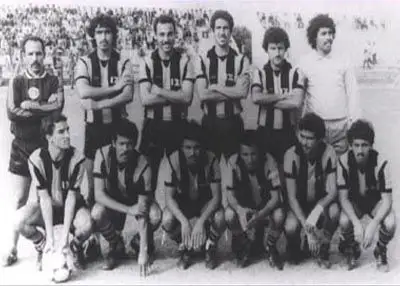
IZK returned in 1971-1972. Top of their group with 71 points, ahead of Salé (68), they were promoted to the first division (D1), the top flight of Moroccan football, along with TAS de Casablanca4. The promotion side5 already included Moulay Haddou, who scored in Tétouan, against the goalkeeper Et-Thami, the “famous Tétouan goal” that secured promotion. Mahmoud Archane was still president. The same year he put forward the idea of a multi-sports club whose sections would all bear the name Ittihad Zemmouri.
The Agadir final
IZK played their first D1 season in 1972-1973, in a sixteen-club league, with Mustapha Bettache on the bench, and finished it in 10th place with 60 points, 10 wins, 10 draws and 10 defeats, 27 goals scored and as many conceded, the year Kénitra AC were champions. Against MAS, the team drew 0-0 in Fez and won 1-0 in Khémisset, El Hattab scoring.
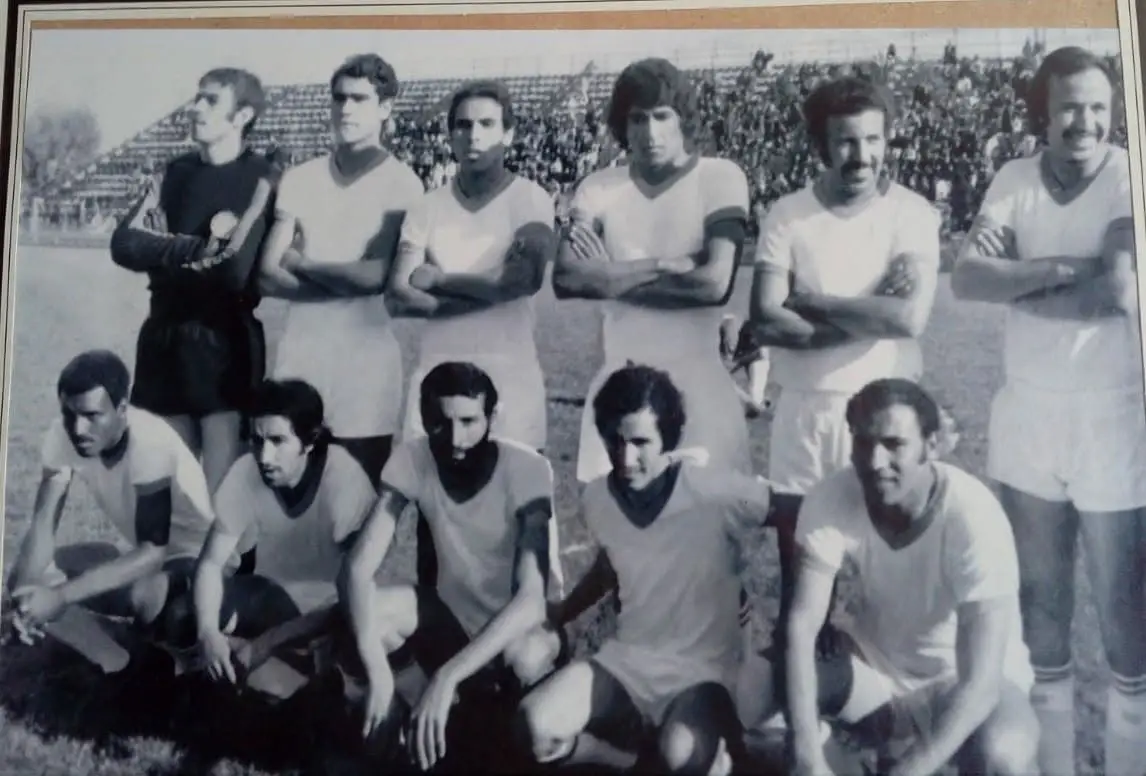
But it was in the Throne Cup that the season was played out. The round of 32 took place on 27 May 1973. On 10 June, in the round of 16, IZK beat Raja de Casablanca 2-1, then SCC Mohammédia in the quarter-finals on 17 June, 2-1 again. The semi-final against US Inezgane on 1 July ended 0-0. A replay was needed, which IZK won 3-0, to reach the first final in their history, and to this day the only one.
The final was played on 22 July 1973 at the Al Inbiâate Stadium in Agadir, against FUS de Rabat, in front of King Hassan II and with Mohamed Benali refereeing. Some supporters had hitchhiked from Tan-Tan, Guelmim or Tarfaya. Ahmed El Mansouri kept goal for IZK. Blinda opened the scoring for FUS in the 39th minute, Ahmed Bouzbouz equalised in the 50th, then Blinda put FUS back in front in the 61st and Sghir made it 3-1 in the 72nd, so Moulay Haddou’s goal in the 89th6 only narrowed the gap. FUS won 3-2. Hassan II was photographed with the Zemmouri side at the Al Inbiâate Stadium.
The public then followed the team all over the country. Taxi drivers went with it everywhere, El Mahjoub El Fech, Hammou El Abioui, Achour Khenfri and Mohamed Bourbouaan, known as “Ould Zahra”; then came coach trips organised by volunteers, without any association, and supporters arriving from Oulmès, Rommani, Tiflet or Sidi Allal El Bahraoui.
The second season in the top flight went badly. Archane was removed from the presidency in favour of two colonels, Noureddine El Guennabi, a former player, and Chafii, who gave up in the face of poor results. Archane came back far too late. Belaïd Essaghrouchni coached the team, which finished 15th out of 16 with 58 points (8 wins, 12 draws, 10 defeats, 28 goals scored, 31 conceded); AS Salé, 14th, had the same number of points and the same goal difference, but had scored three more goals. IZK went down with Kénitra AC, champions the previous season.
Back in D2, the club still reached the Throne Cup semi-finals in 1975. It knocked out Nahda de Tanger on 16 February and Moghreb de Tétouan on 9 March, 3-1 each time, got through the quarter-finals on penalties and fell only in the semi-final, again on penalties, to Union de Sidi Kacem (1-1). In the league, it finished 2nd in its group behind CODM de Meknès, the only side promoted.
The second-division years
The former international Hassan Akesbi became coach in December 1975, with Lahcen Boukhriss as his assistant, just as the local authority closed the municipal stadium, whose pitch had been damaged by heat and lack of water: the team then played in Tiflet or on a new ground still being laid out. Mahmoud Archane left football at the end of the 1975-1976 season. The generation of the final broke up, and IZK spent twenty-six seasons outside the top flight7.
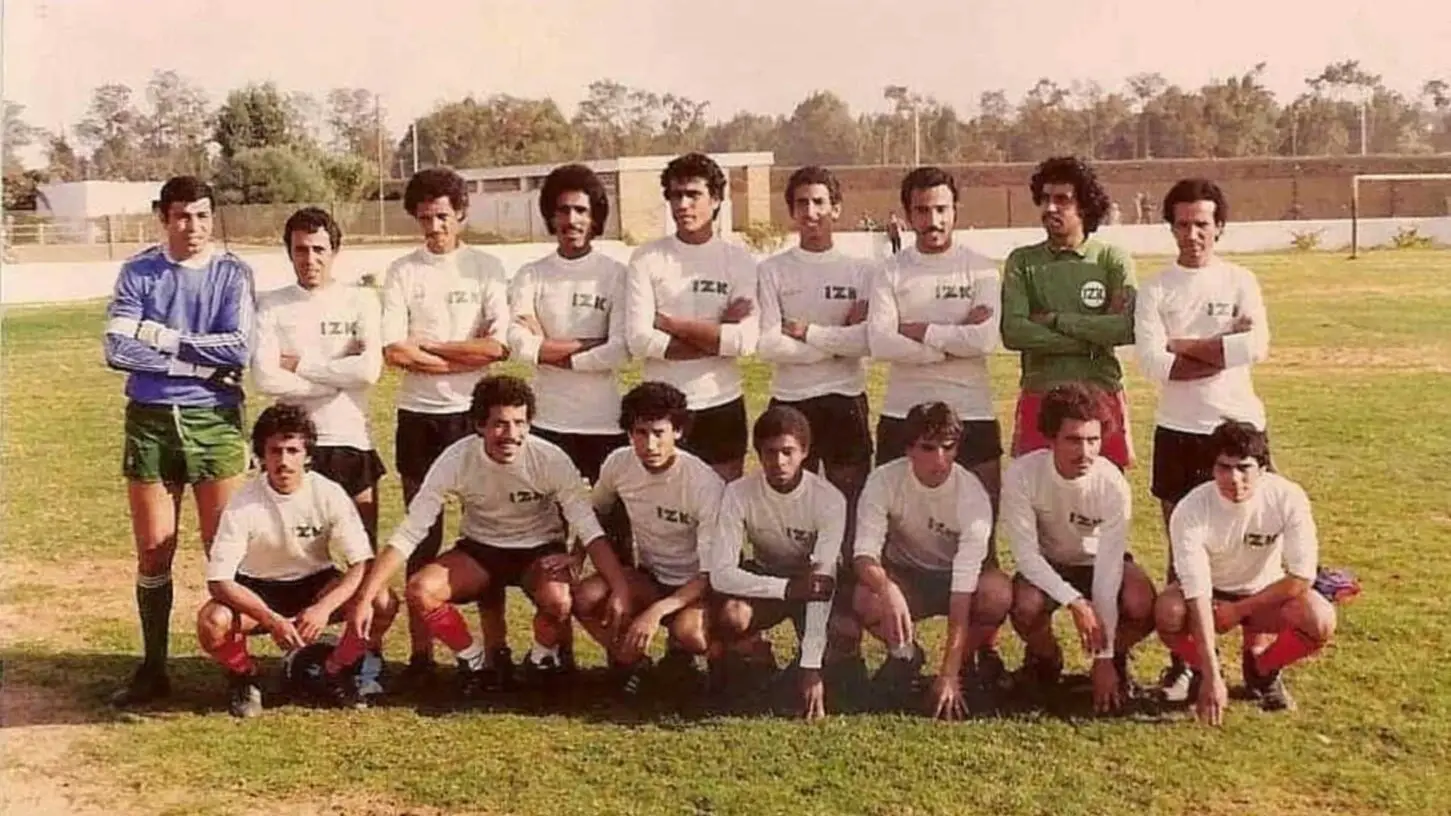
The ten years that followed were lean. Seven presidents came and went in ten seasons, among them Hamid El Mohandis, known as “El Hadj Mouloud”, Mohamed El Guertili, the former player Hamid Tabach and Hammadi Mazzaz, president three times, who sold everything he owned for the club. No player was paid; the officials found them jobs at the prefecture or in the local councils. IZK reached the Throne Cup round of 16 in 1976-1977 and went out on penalties to RS Settat. In 1983-1984, they finished 9th out of 14 in the North group.
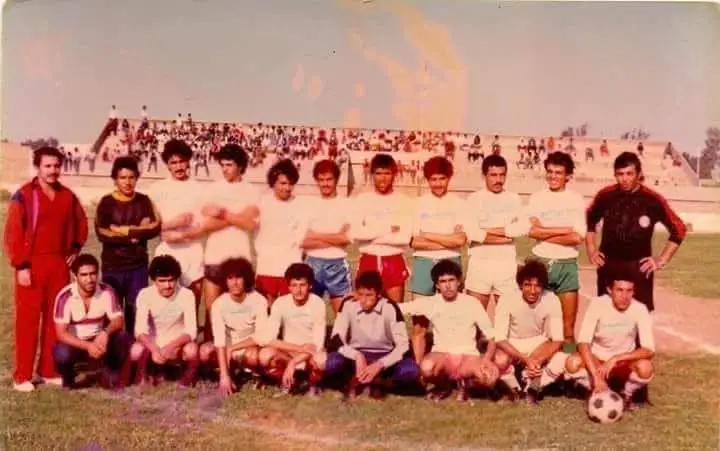
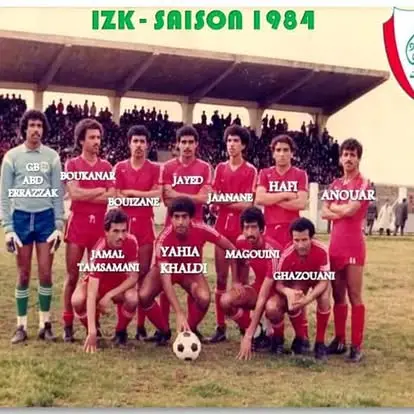
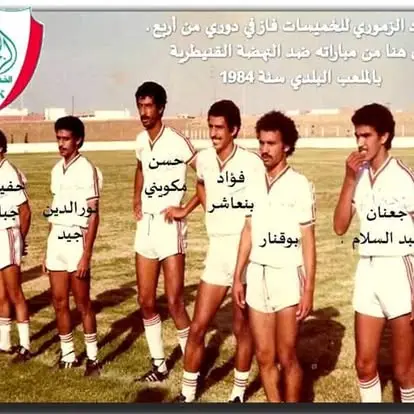
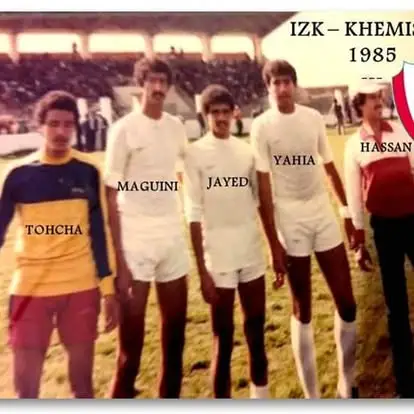
A midfielder born in Khémisset on 24 October 1969 made his first-team debut in 1988: Houcine Ammouta, who left for FUS in 1990 and won 5 caps for the national team between 1991 and 1994. In 1989-1990, the club reached the Throne Cup quarter-finals, where it lost 3-1 to CLAS de Casablanca after beating MAS 2-1.
Presidencies in the 1990s were short. Survival even came down to play-offs, in 1992 and again in 1995. In 1994-1995, after poor results, the governor handed the club to two lawyers, Miloud Abbouz and A. Belamine; at that point the club’s account held just 100 dirhams. Mohamed El Guertili took the presidency back in 1995, held it for seventeen years without a break and brought into the first team young players trained at the club by Hajjama, Jabbar, Karouel, El Messaoudi and El Anbari, while in those same years the first supporters’ association was born, chaired by the lawyer Abderrahmane Belamine.
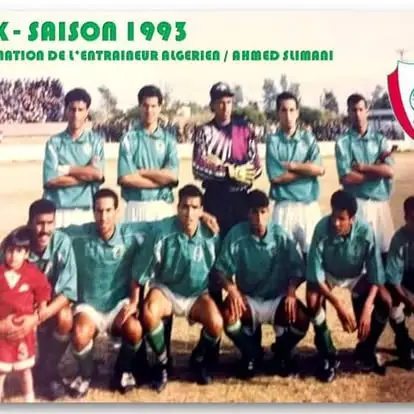
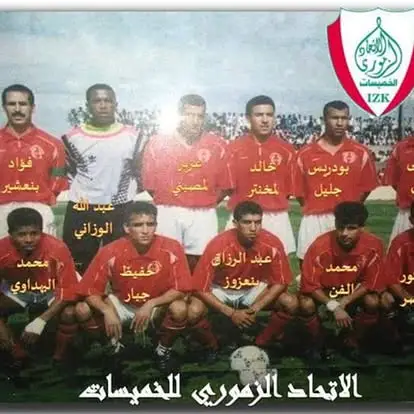
Mohamed Boubadi, a native of Khémisset and a former player of the club, took over the team in 1999-2000, with Ahmed Boukhriss as his assistant, and after the 21st matchday IZK were already twelve points clear of second place. Then they took just one point from four matchdays. On 13 May 2000, they lost 3-0 to RAC de Casablanca at the 20 August Stadium, the crowd broke down the stadium’s metal gates, and police officers, members of the auxiliary forces and children were injured. The FRMF had IZK’s last matches played in Salé and docked them a point, which was restored after the intervention of the governor, Mohamed Aouad, and of the president, El Guertili. On 17 May the governor met the players and officials, and training moved to Mohammédia.
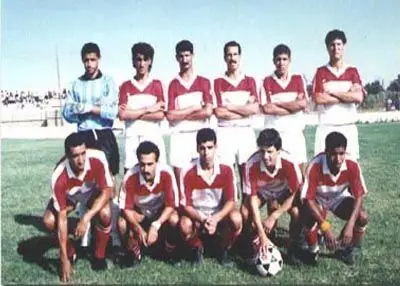
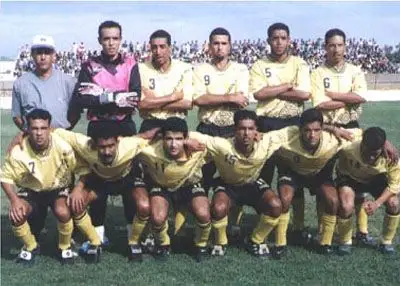
The 30th and final matchday took place on 10 June 2000. IZK had 53 points, KAC Kénitra 50. KAC won 4-0, but at the El Massira Stadium in Salé, in front of 3,000 spectators, IZK drew 0-0 with Union de Sidi Kacem, and that draw was enough: they finished 2nd with 54 points (15 wins, 9 draws, 6 defeats, 32 goals scored, 20 conceded), behind RAC (56) and one point ahead of KAC. The starting eleven for the last match: Jaânane; Rezki, Chahm, Hamidi, Ouchnane, El Mouloua, Ouahdi, Ezzahani, Bakhouch, Benboubker, Echerji. Of the 31 players in the squad, 25 had been trained at the club, and promotion, which El Guertili described as “planned over five years”, was achieved on a budget of 150 million centimes. More than two hundred cars made the journey from Salé to Khémisset after the match.
Back in the top flight
The Spaniard Juan Pedro Benali was welcomed at the stadium on 19 August 2000 as the new coach, with Rachid Chakour as his assistant. IZK won their first D1 match, 2-1 against FAR. They were still playing their home matches at the 20 August Stadium, whose terraces had just been restored and supplied with electricity, and finished that first season with 35 points, despite a 7-1 defeat by MAS on 3 June 2001.
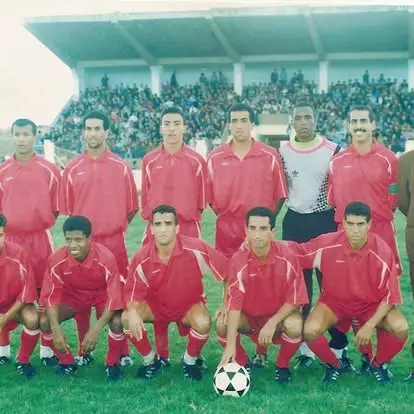
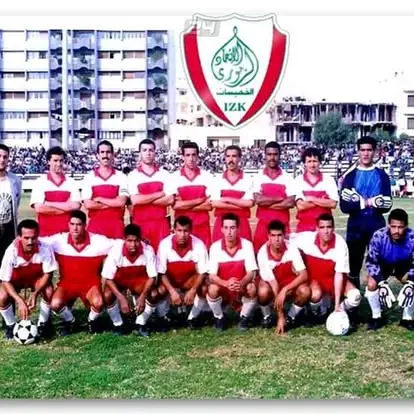
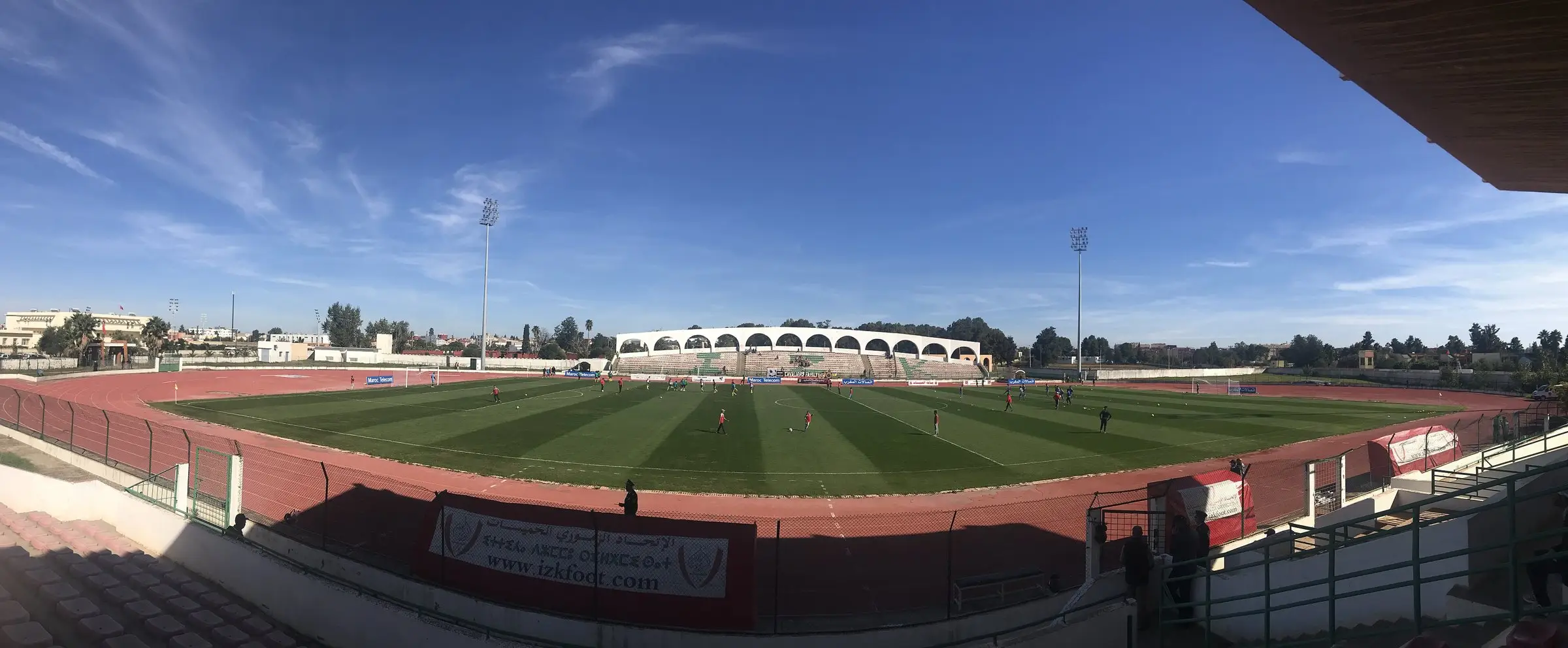
In 2002-2003, after four matchdays without a win, two draws and two defeats, the club parted company with Aziz El Khayati by mutual consent. Houcine Ammouta, who had played for FUS and in the Gulf and was a graduate of the Moulay Rachid institute, was introduced to the players on 31 October 2002 as the new coach, and he also carried on as a player. The same season, IZK changed grounds. On 25 November 2002, they hosted Wydad at the 18 November Stadium and lost 2-1 in a stadium which, a former municipal ground redeveloped in 2000 and 2001, had been inaugurated by King Mohammed VI, accompanied by Prince Moulay Rachid, on Sunday 14 October 2001, and which today holds around 5,0008.
The following seasons were much tighter. Hassan Moumen, who had come through the club, coached the team in 2003-2004, Ammouta was now only a player, six regulars had left for clubs abroad without any compensation, and in March 2004 Aujourd’hui le Maroc ran the headline “IZK, or the fight for survival”. Yet IZK had beaten Kénitra AC 5-1 on 16 November 2003, in front of 750 spectators, with a goal from Ammouta and two from Khalid Bakhouch. They narrowly survived, 14th with 29 points. The Romanian Eugen Moldovan led the team to 6th place in 2004-2005 (37 points, including 16 draws in 30 matches). Ammouta became head coach in 2005-2006. He took IZK to the Throne Cup quarter-finals, lost on penalties to IR Tanger on 7 May 2006, then to 7th place in the league in 2006-2007, with 42 points.
The title race
The 2007-2008 season was the best in the club’s history. Mohamed El Guertili was still president, and Houcine Ammouta coached a team captained by Aziz Lagraoui. On 16 December 2007, IZK beat Wydad 2-0, in a match played behind closed doors because of a sanction against Wydad, and went top of the league after the 11th matchday. They also beat Raja 2-1 at the 18 November Stadium, with goals from Keita (8th minute) and Belbekri (41st), in front of 3,600 spectators.
In the spring, the team was still in the race. A 2-1 win away to MAS put IZK 2nd after the 25th matchday, then, on the 26th, they beat Wydad again, 1-0, with a goal from Hicham El Fatihi in the 43rd minute and in front of 7,000 spectators, which knocked Wydad out of the title race. IZK, though, stayed in it until the penultimate matchday. On 9 June 2008, on the last, they beat DHJ 2-1, with goals from Rahal El Khaddouri in the 2nd minute and Saïd Aït Bahi in the 25th; Al Mountakhab spoke of a “well-deserved runners-up title”. Final table: FAR 53 points, IZK 50 (14 wins, 8 draws, 8 defeats, 34 goals scored, 22 conceded), Raja 48. El Fatihi and El Khaddouri scored the same number, 8 goals each.
Ammouta took stock in Aujourd’hui le Maroc: “I think we missed out on the title. […] Time and again, we were in first place in the overall standings. A first for the team from the town of Khémisset.” And he did not renew his contract: “I live in Rabat and the travelling tires me.”
The African campaign
Second place gave the club the only continental campaign in its history, the 2009 CAF Champions League, whose preliminary round was settled without a match being played, as Wallidan of the Gambia withdrew. In the first round, IZK travelled to Sekondi, Ghana, to face Asante Kotoko on 15 March 2009, with Mohamed Boubadi on the bench. They lost 3-1 in front of 9,000 spectators. But Hicham El Fatihi scored the club’s first goal in African competition there.
Khalid Lamkhantar, the assistant coach, who had come through the club, had already replaced Boubadi by the time of the second leg on 5 April at the 18 November Stadium, where IZK won 2-0 in front of 7,000 spectators, in the presence of the minister Khchichen and the governor Abderrahmane Zidouh, with goals from Saïd Aït Bahi (46th) and Rahal El Khaddouri (81st), and went through thanks to the goal scored in Sekondi. The Kotoko officials boycotted the press conference.
The second round pitted IZK against TP Mazembe, the eventual winners of the competition: a 1-0 defeat in the first leg on 19 April, then 0-0 in the second leg, on Saturday 2 May, at the 18 November Stadium. Knocked out, the club dropped into the Confederation Cup. On 16 May it drew 1-1 with Stade Malien in Khémisset, in front of 1,000 spectators, Hamouni scoring in the 9th minute, then lost 3-1 in the second leg in Bamako at the end of the month. Six matches in all. One win, two draws, three defeats, five goals scored and eight conceded.
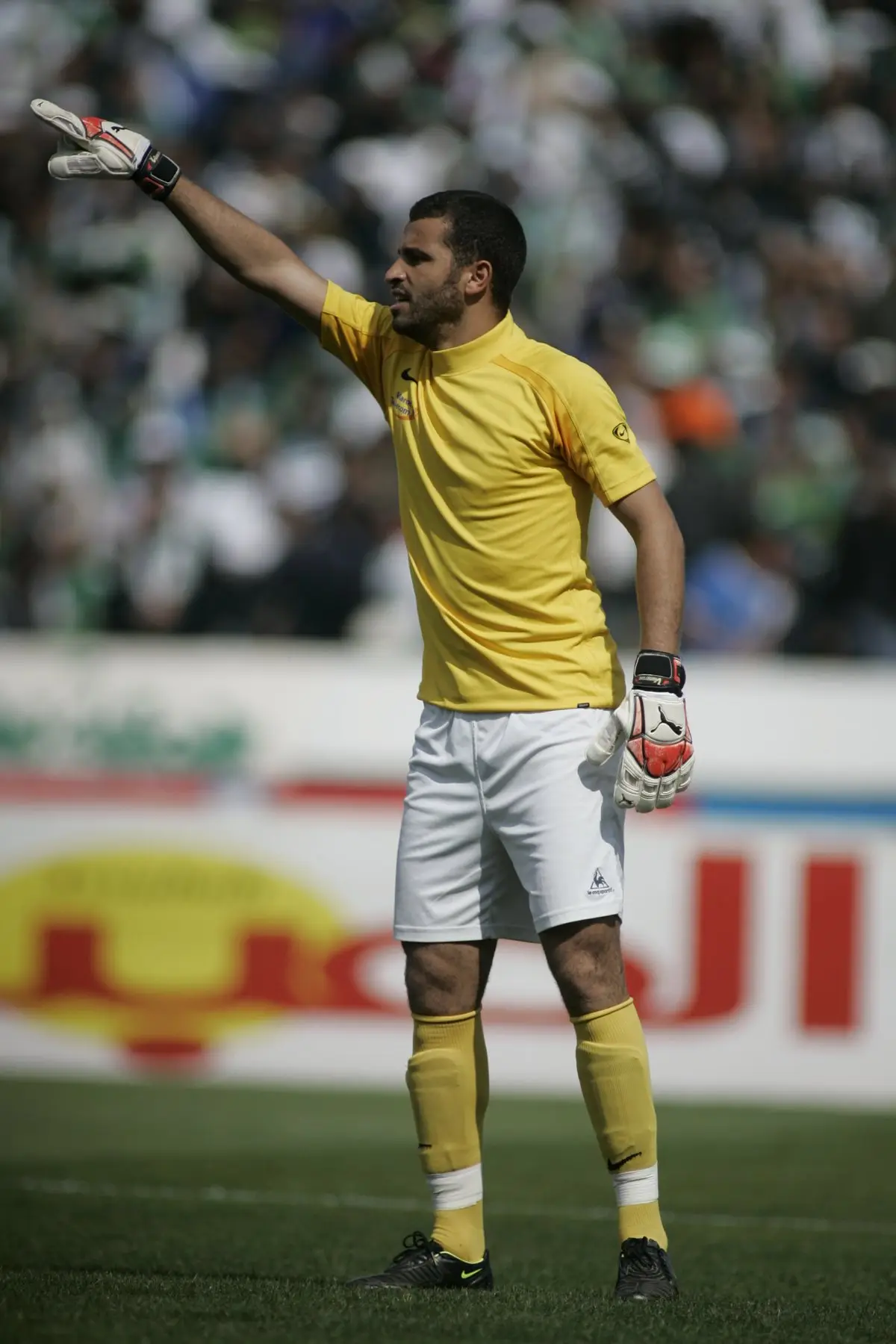
The same season, IZK reached the Throne Cup semi-finals, knocking out Widad de Fès on penalties on 8 April (2-2, then 9-8), RS Settat on 26 April (1-0) and IR Fkih Ben Salah on 1 July (2-0, both goals from Adil Fahim), before losing the semi-final on 5 July 2009 to FAR, 0-0 after extra time and 5-4 on penalties. In the league, they survived only in 13th place, with 33 points, thanks to a win against MAS in Fez. In October 2009, the goalkeeper Issam Badda, born in Khémisset, was named in a preliminary national squad while playing for IZK.
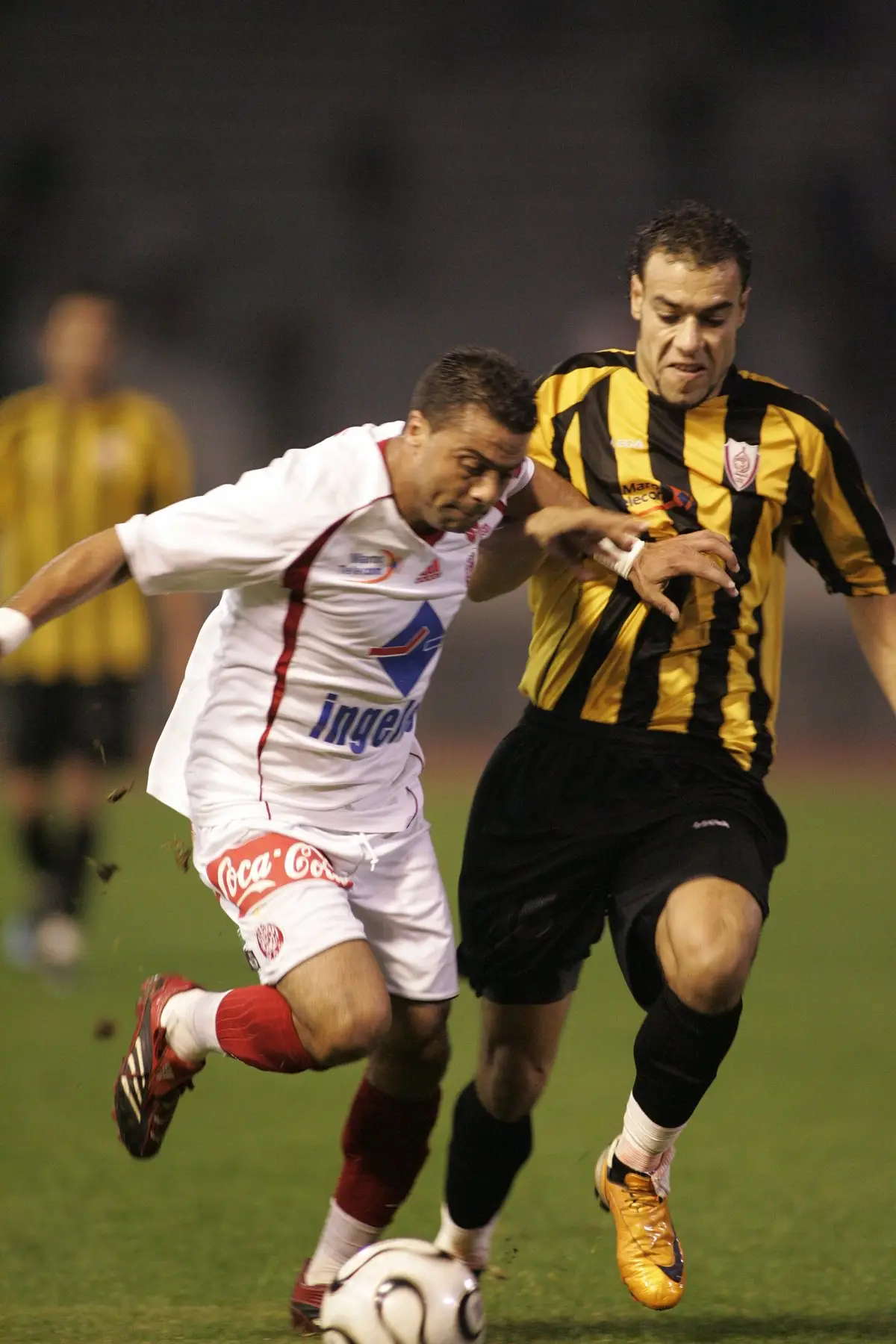
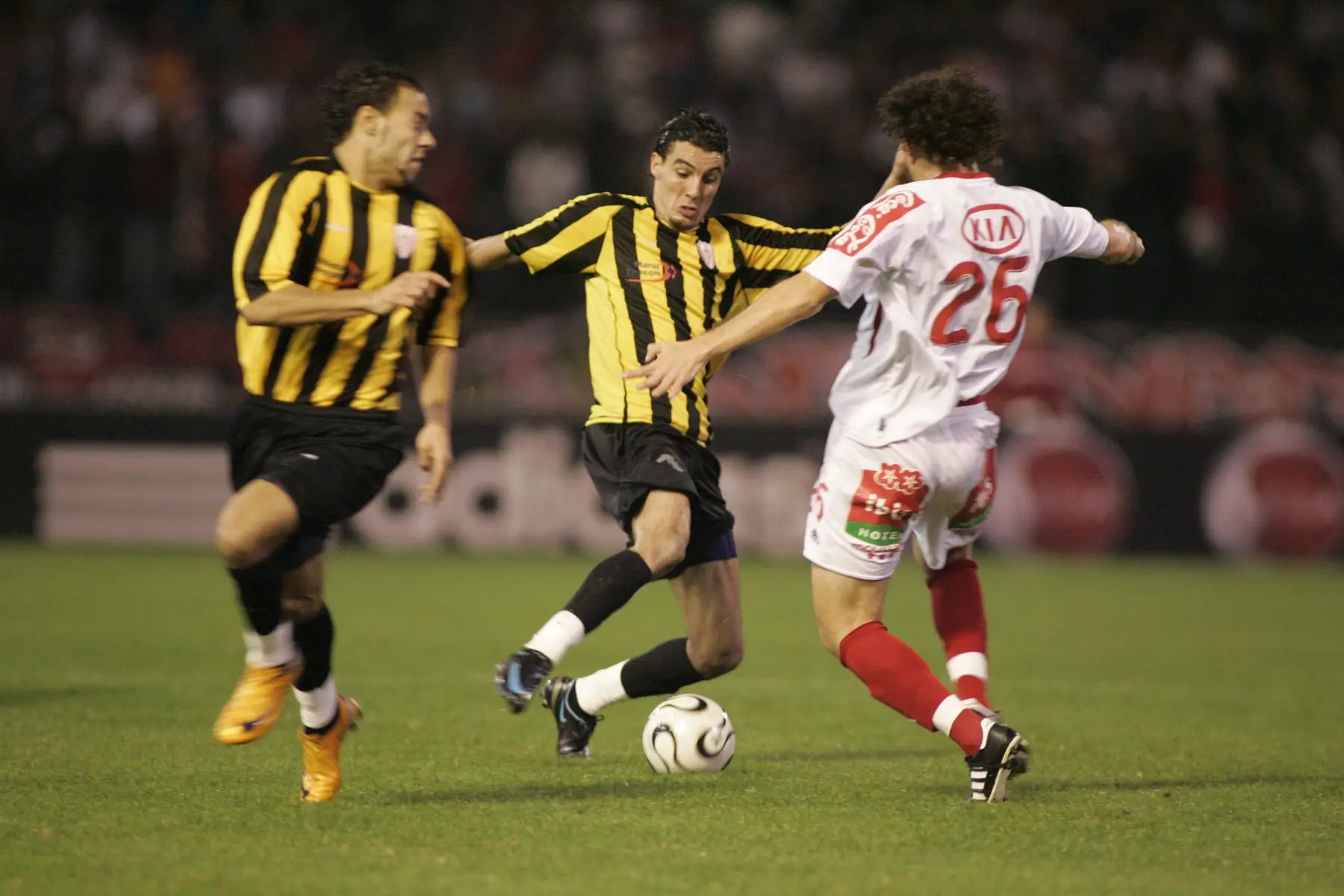
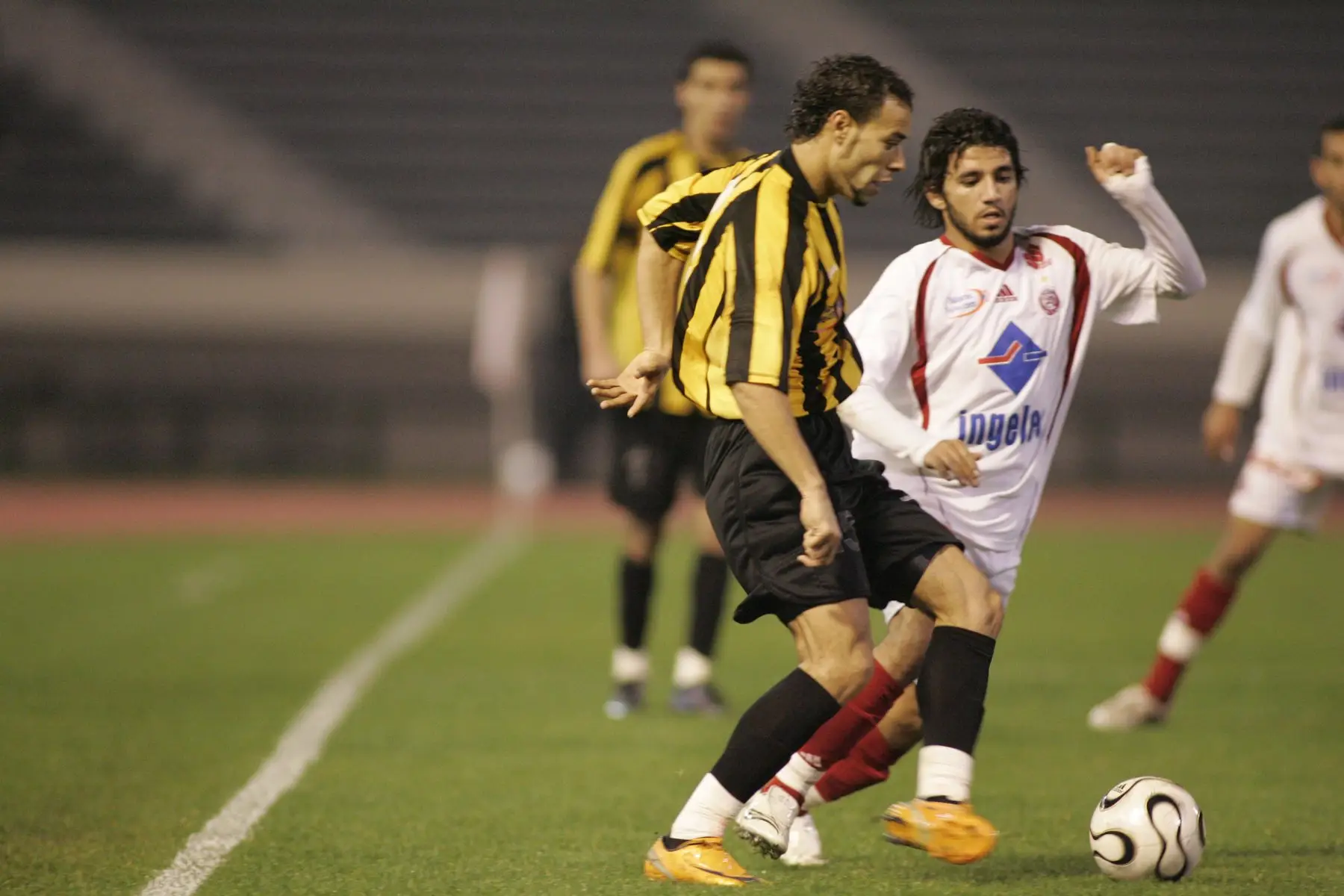
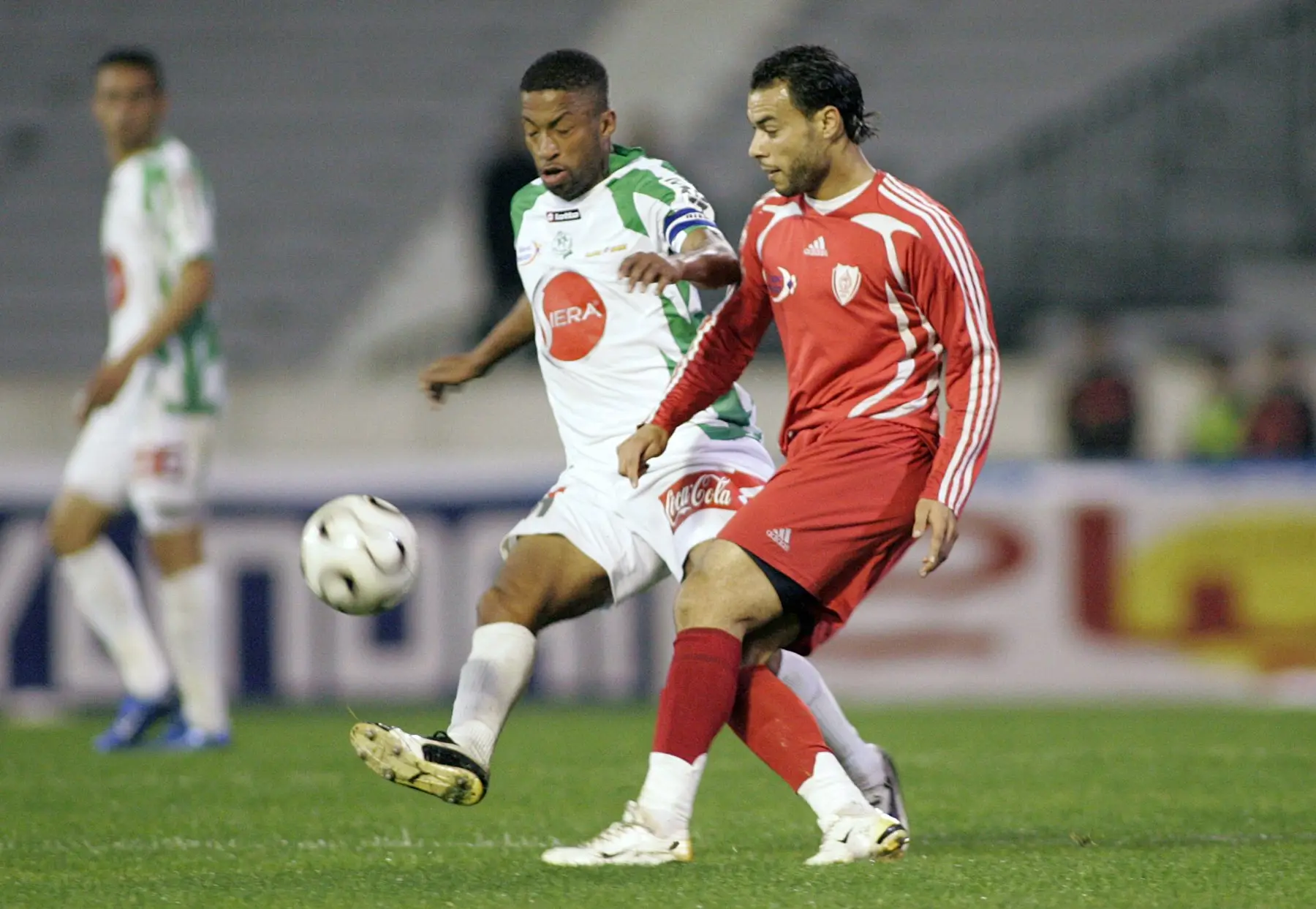
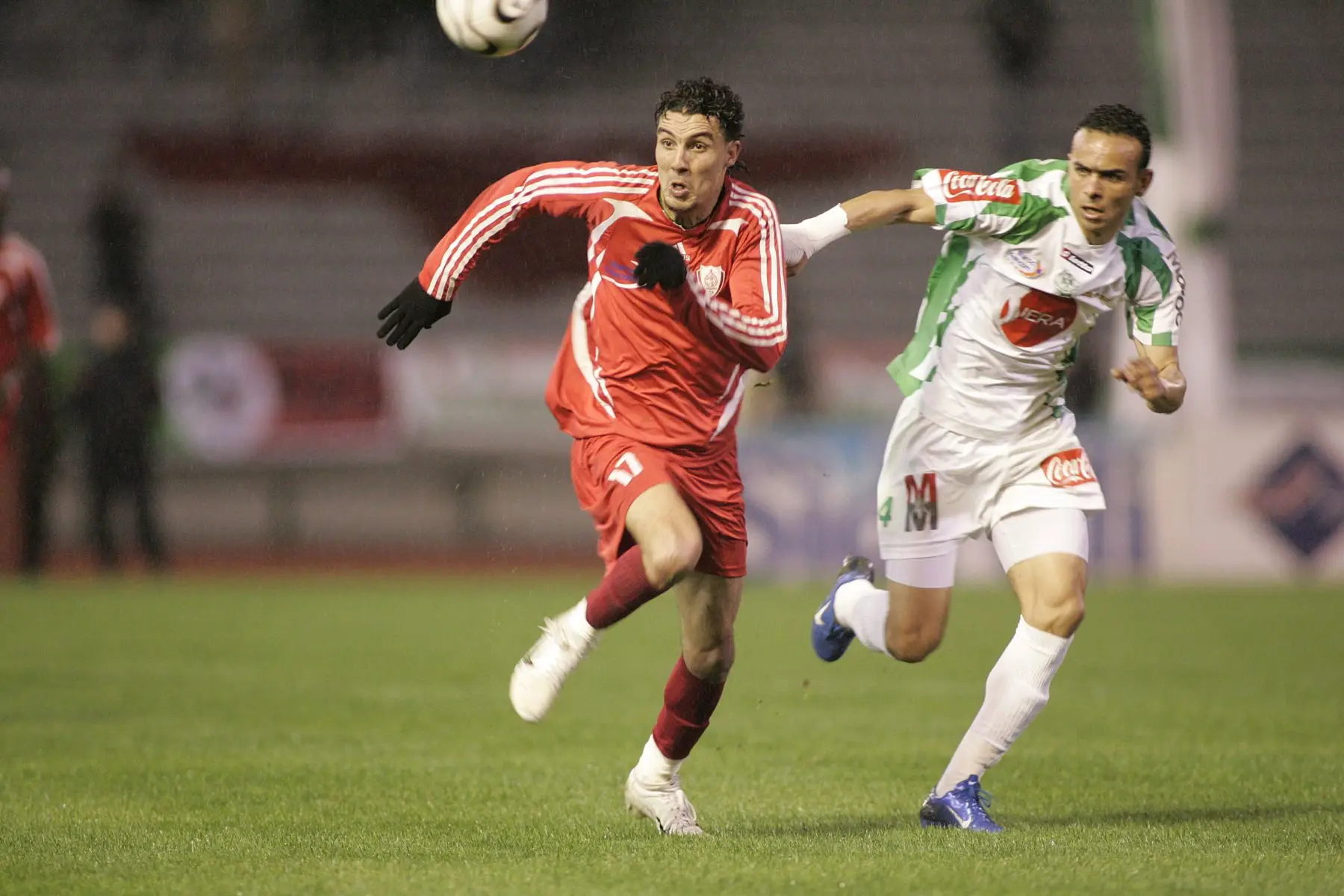
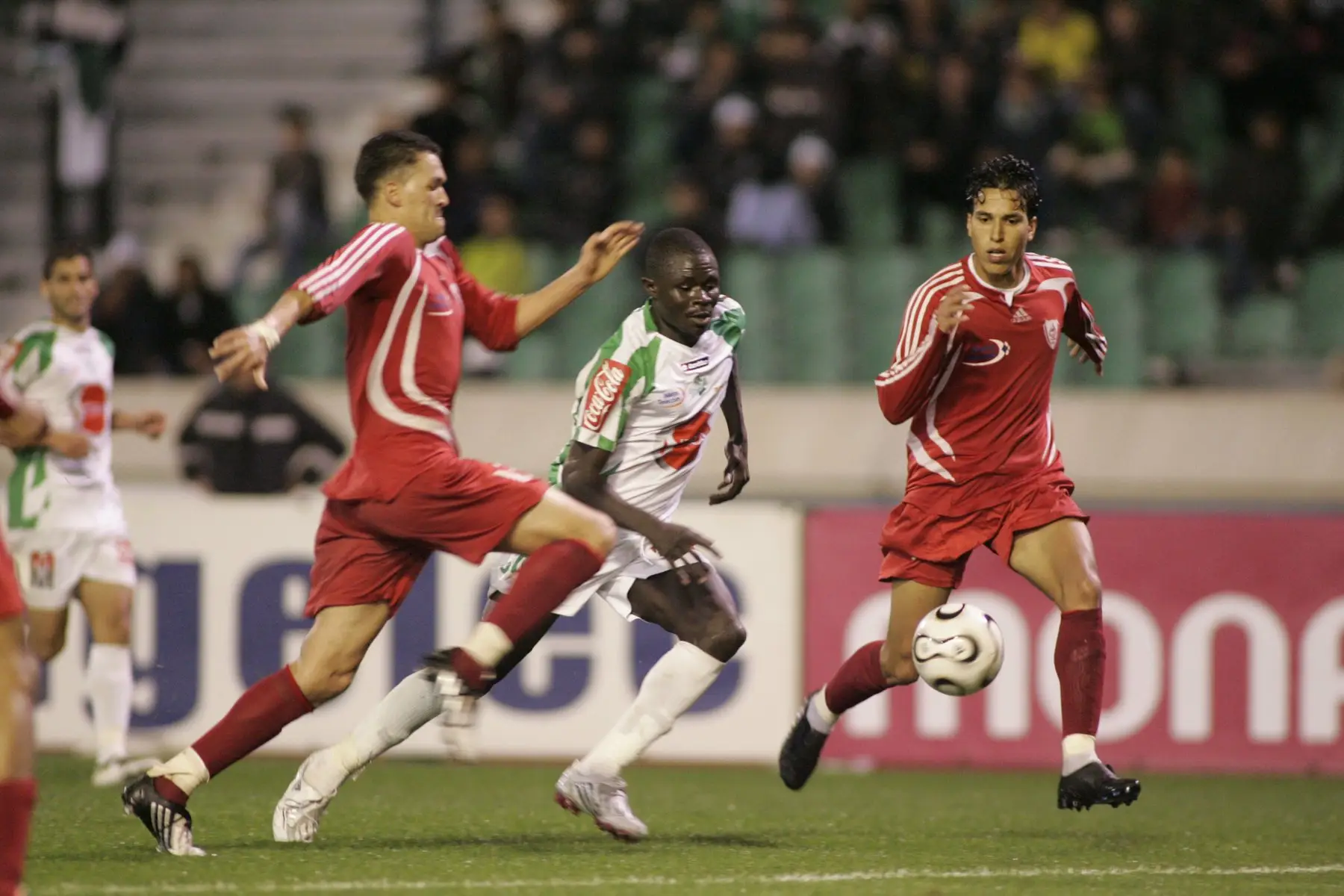
The 2009-2010 season saw three coaches come and go: Khalid Lamkhantar, an Italian, then Abdelaziz Kerkache, in charge by March. IZK scored only 15 goals in 30 matches, the weakest attack in the league. Before the final matchday, they were 14th with 32 points, OC Safi 15th with 30. Against DHJ, IZK were behind from the 16th minute and only equalised with a penalty taken after twenty minutes of stoppage time and converted by Taoufik Lamrabet. But Safi beat MAT. The two clubs finished on 33 points, Safi went ahead on head-to-head record, and the complaints the board lodged with the FRMF, CAF and FIFA came to nothing.
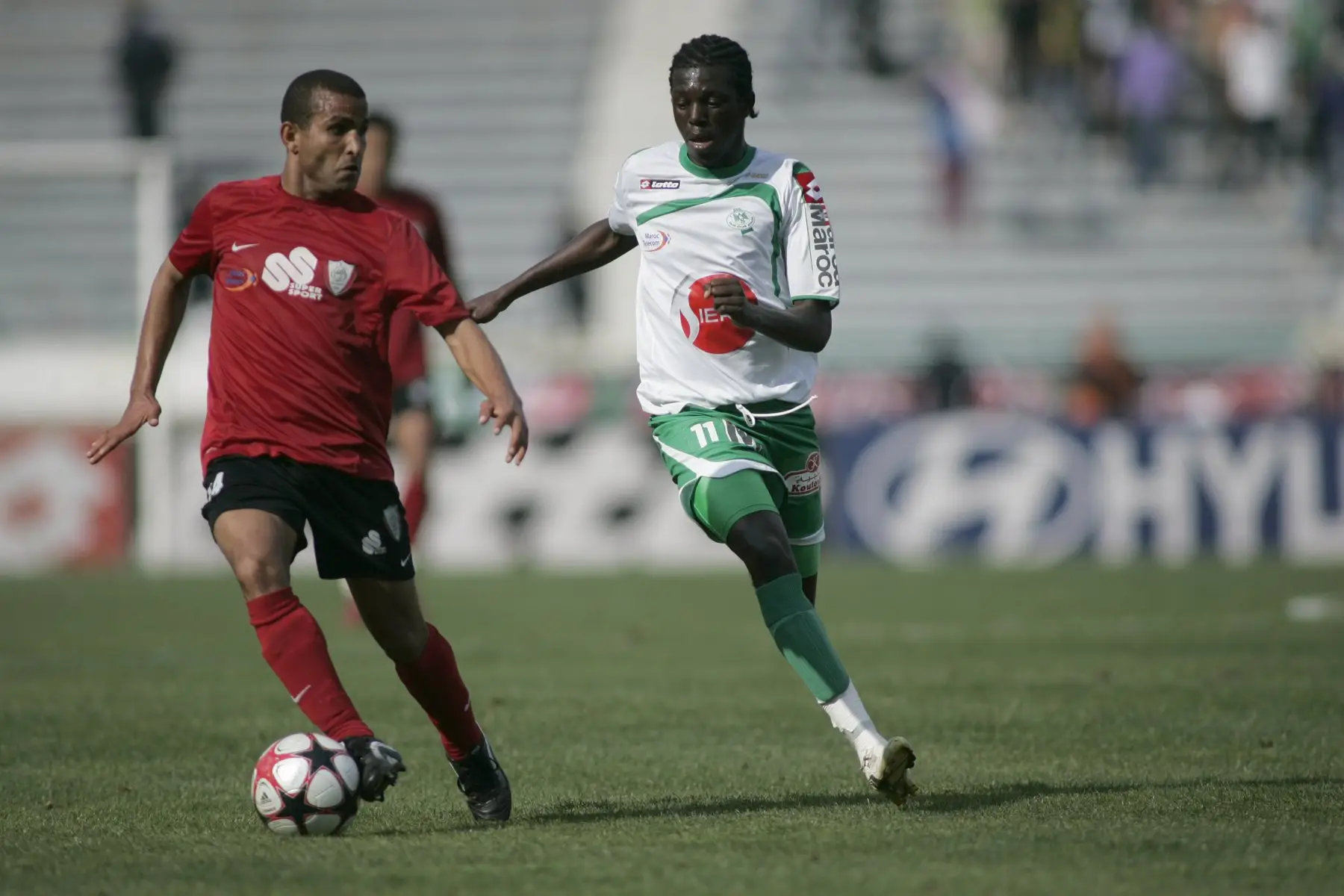
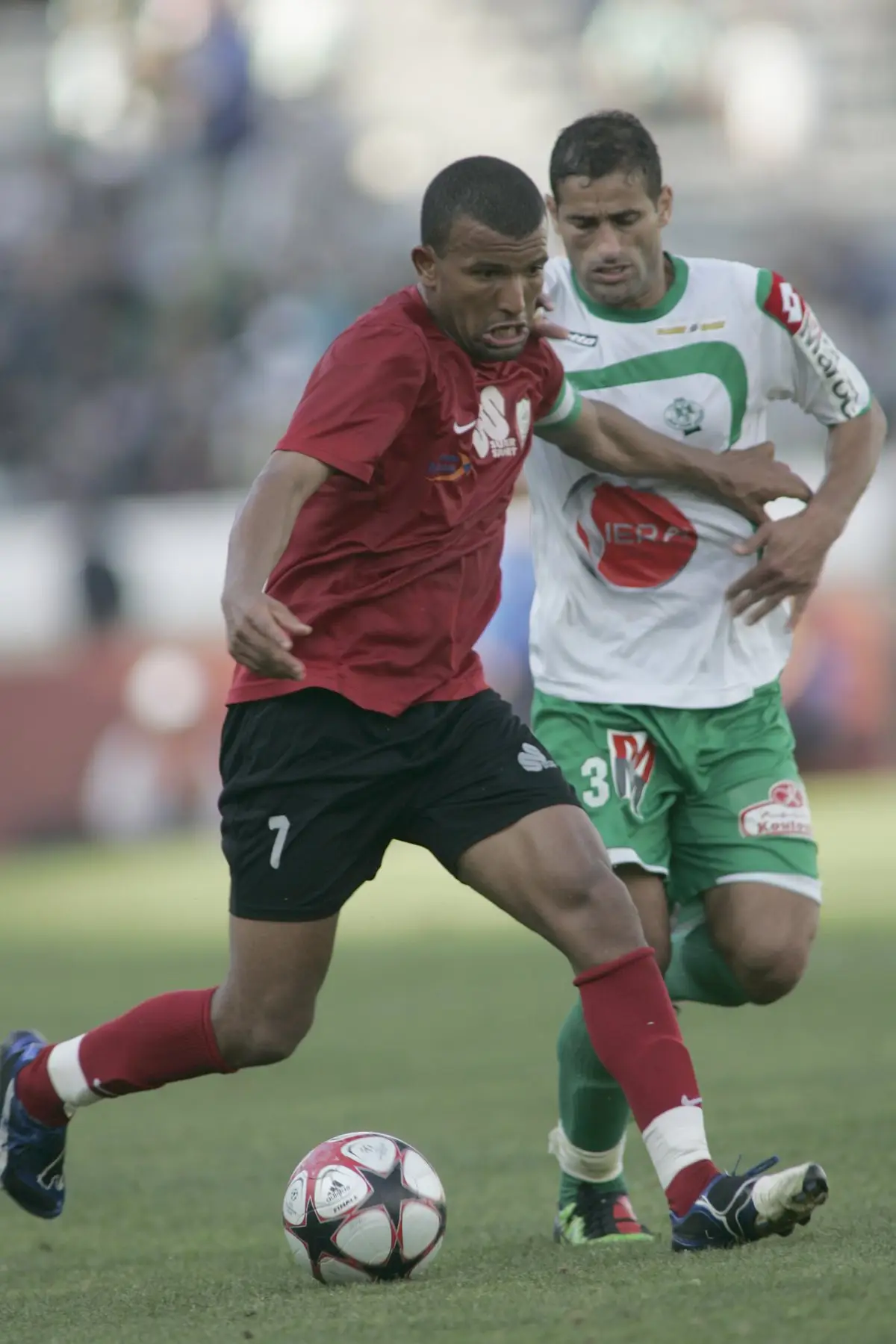
Yo-yo years
Relegation opened a leadership crisis. In September 2010, a “Movement for change and reform” challenged the management of the president, Mohamed El Guertili, and the players issued a statement in support of the man they called their “spiritual father”.
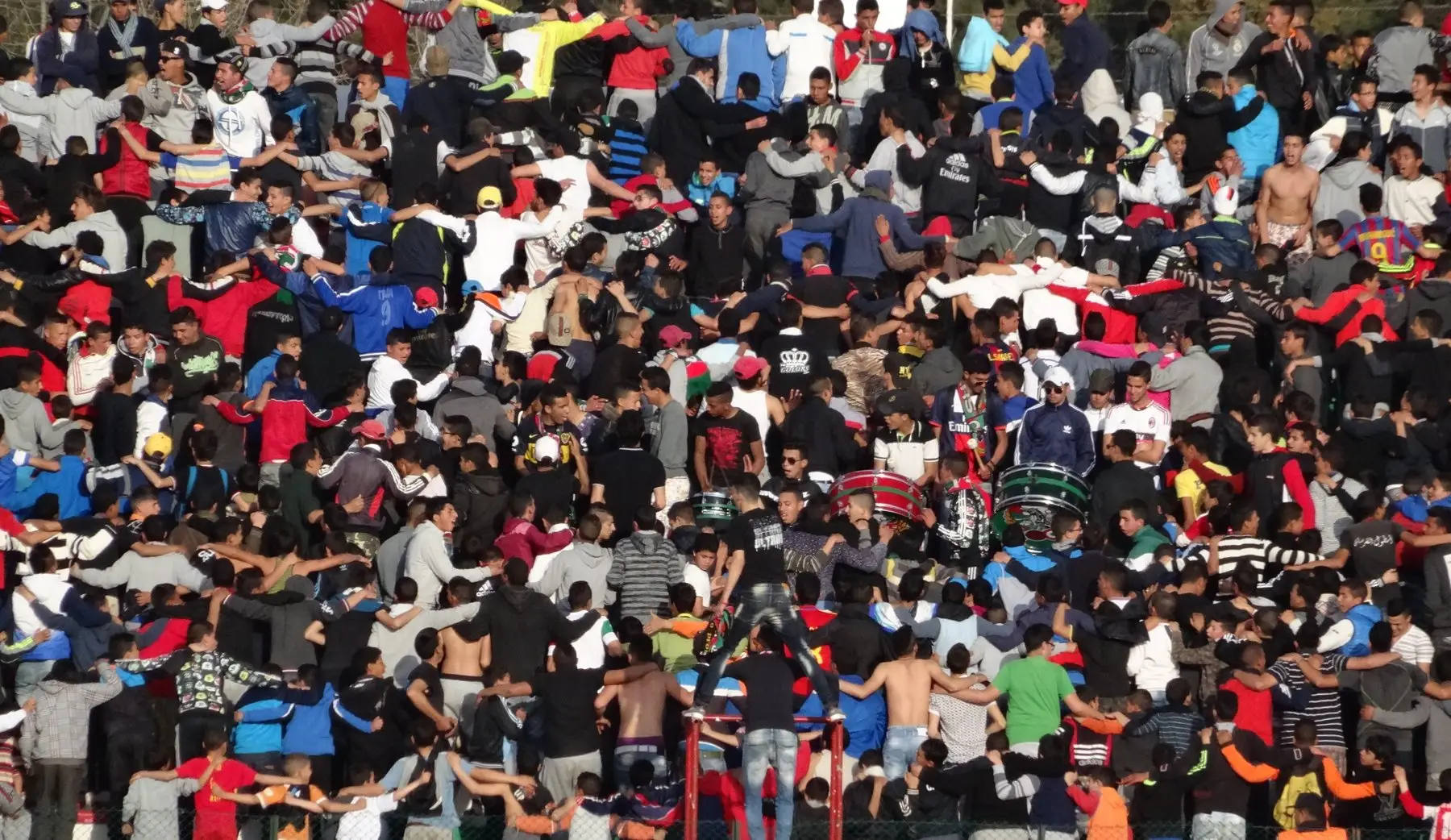
On the pitch, Abdelaziz Kerkache’s team went top of D2 from the 4th matchday. Everything came down to the last one, on 22 May 2011, at the 18 November Stadium, against USM Aït Melloul: a draw was enough for IZK. Around 12,000 spectators were there, nearly 1,000 of them from Aït Melloul. In the 76th minute, an Aït Melloul shot hit the bar and came down on the line; the referee, Mohamed Yara, did not award the goal. The score stayed 0-0, the two clubs finished on 61 points, and IZK went up on head-to-head record. “Promotion to the first division, which I dedicate to the fans, is the fruit of a great deal of work,” said Kerkache, whose goalkeeper, Houcine Amsa, played thirty matches that season.
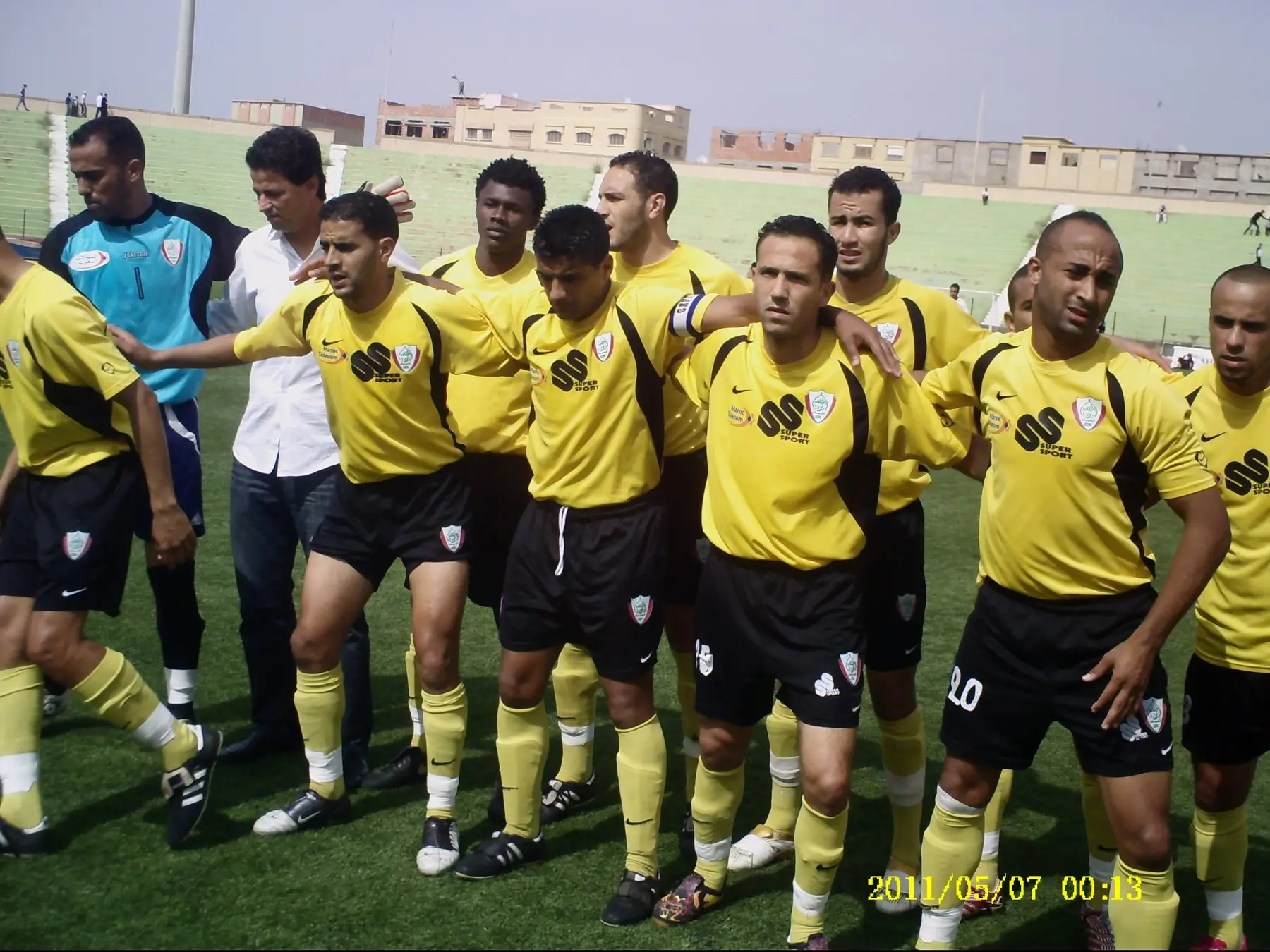
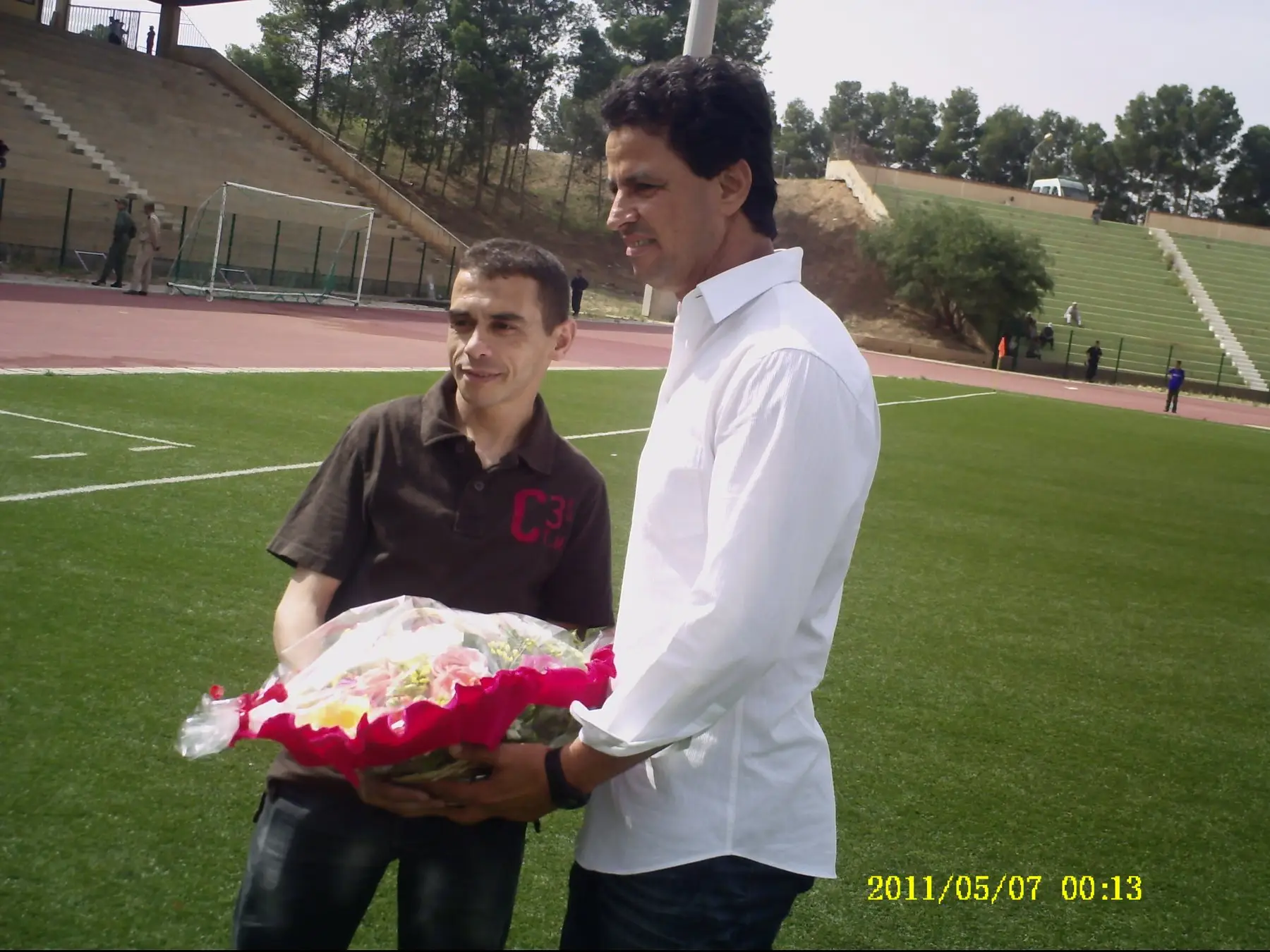
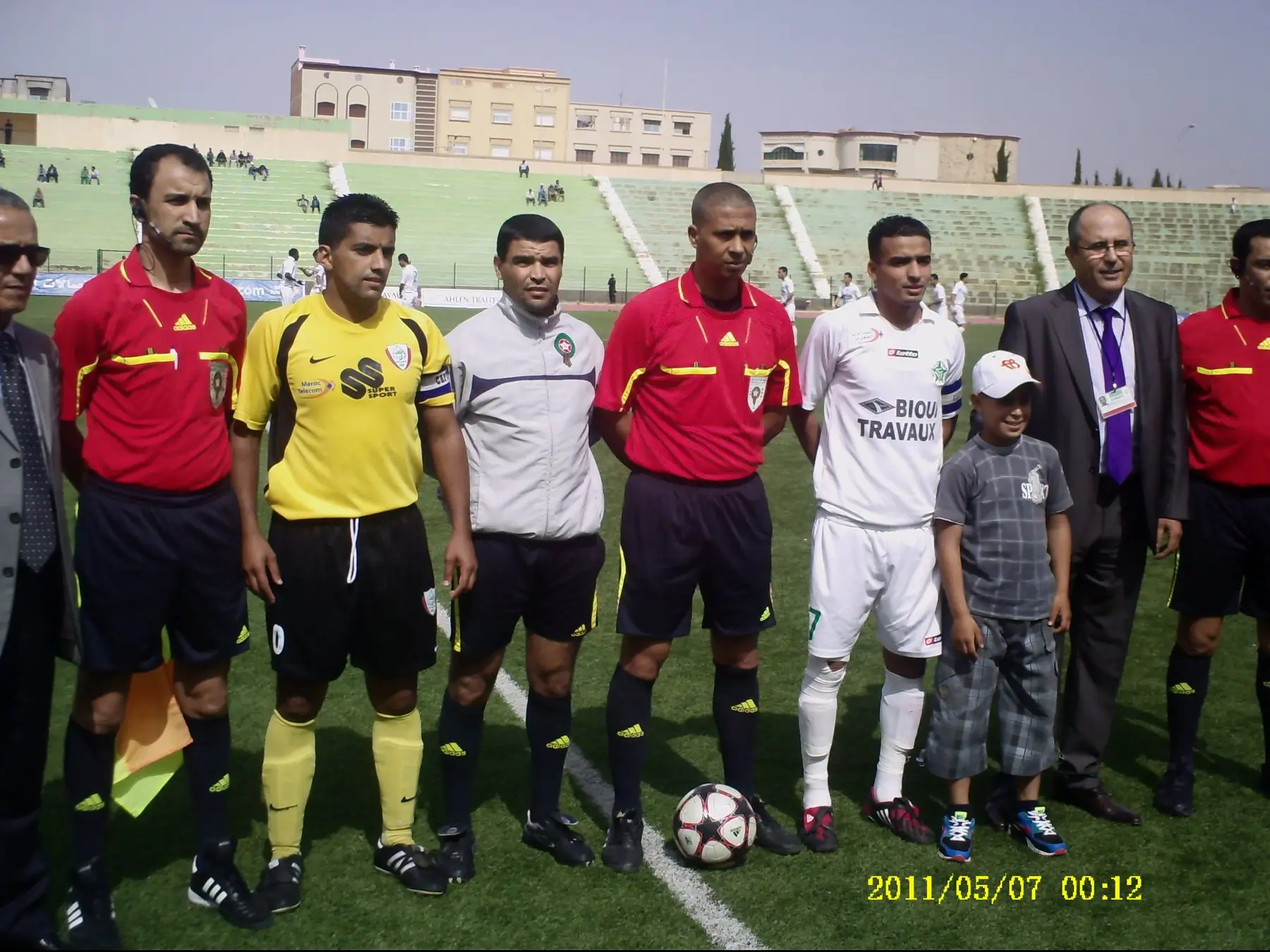
The stay in D1 lasted a single season. With Saïd El Khaider on the bench at the start, IZK scored only 12 goals, finished 16th and last with 24 points and went down on 20 May 2012, after a 3-2 defeat at El Massira conceded in stoppage time. Meanwhile the crisis deepened. Two rival boards were formed and the courts in Khémisset were brought in, until Al Mountakhab announced, on 9 April 2012, the installation of an interim committee chaired by Hassan El Filali, the product of an agreement between the province, the protest movement and part of the board, and recognised by the FRMF. Originally from El Bahraoui, president of the local council and then of the provincial council, and a member of parliament, Hassan El Filali is still the club’s president in October 2026.
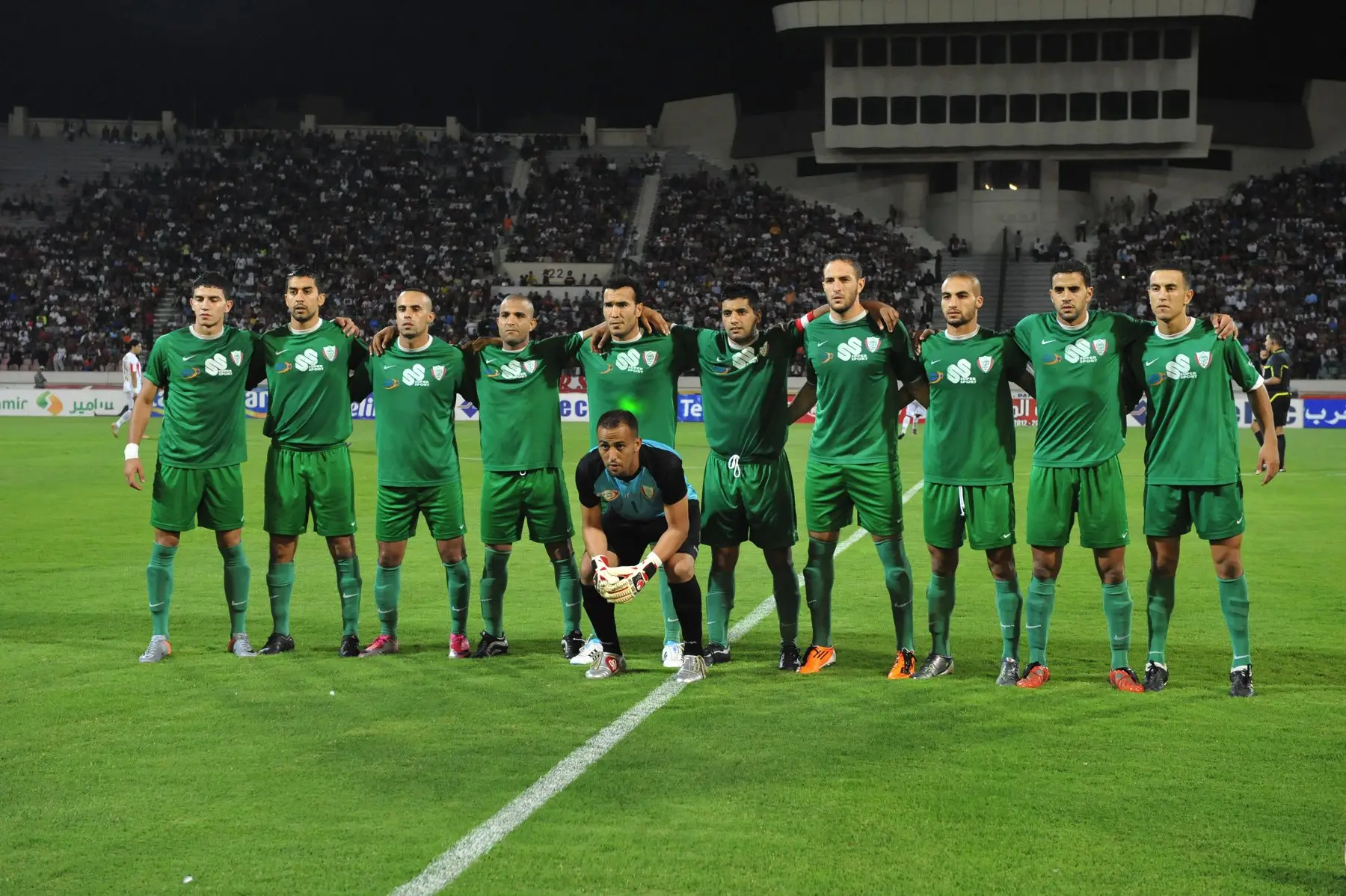
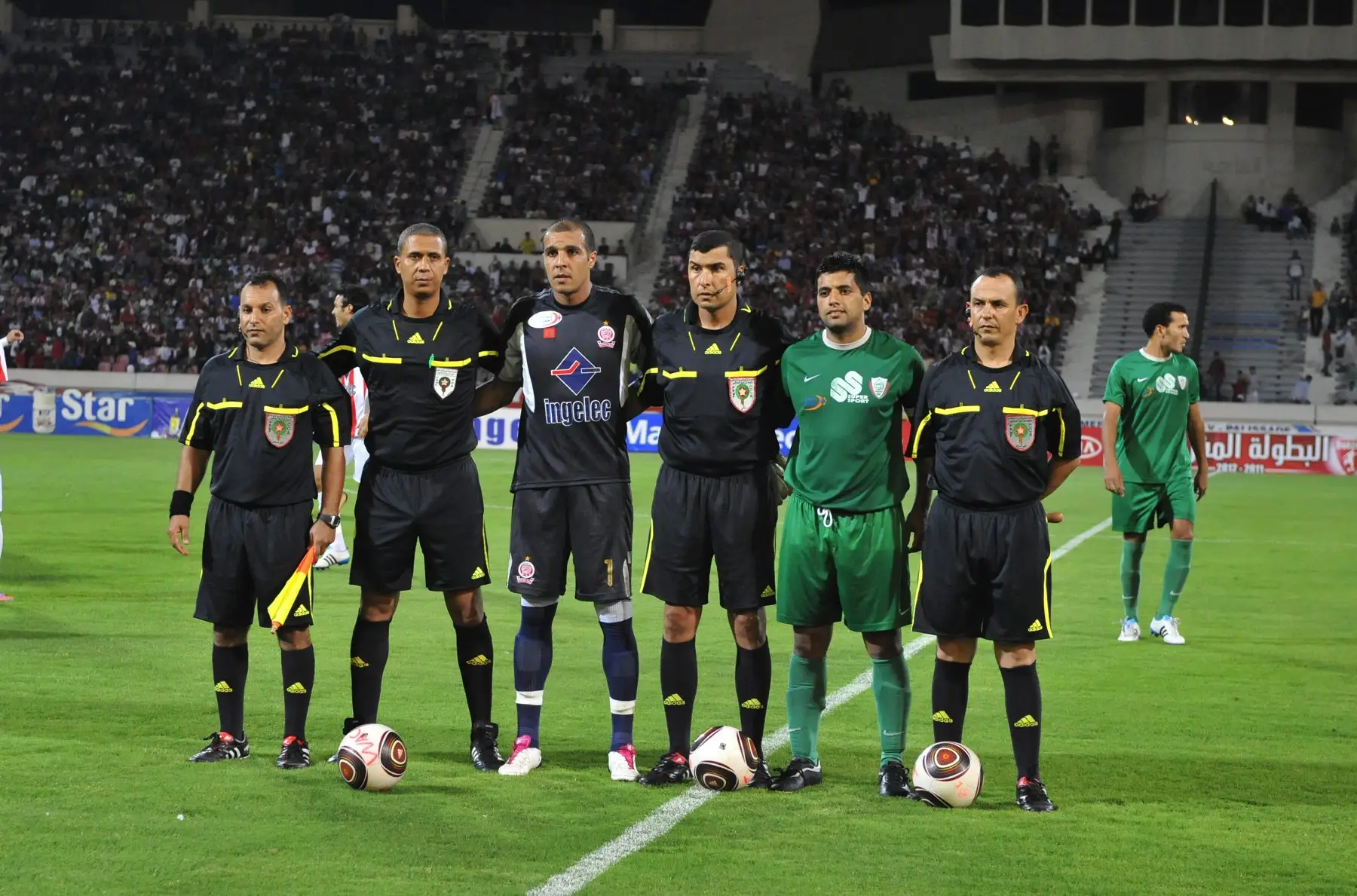
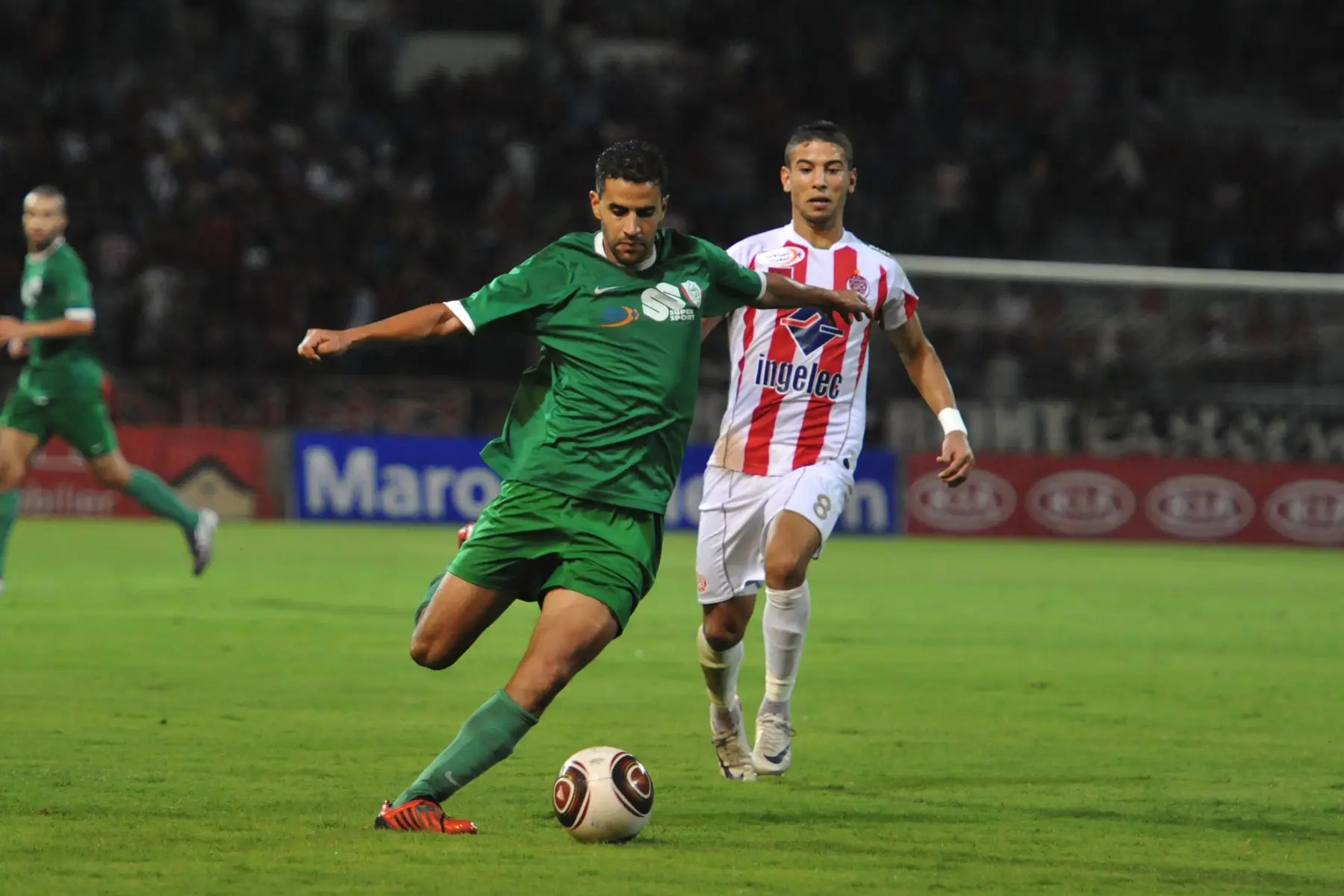
In 2012-2013, IZK finished 3rd in D2 with 50 points. Abderrahmane Slimani coached the team until 9 April 20139, and Mustapha Bidoudane, three times the top scorer in D1, played for them from September 2012 to June 2013.
The following season began with Samir Ajam, who was replaced by Fouzi Jamal in mid-September 2013, and it was under Jamal that IZK won 1-0 away to Rachad Bernoussi on 18 May 2014, on the 29th matchday, to secure promotion with a matchday to spare. They took the title on the final day by beating CODM 2-0, and the FRMF presented them with the trophy: D2 champions with 57 points (15 wins, 12 draws, 3 defeats, 34 goals scored, 13 conceded), they finished four points ahead of CA Khénifra.
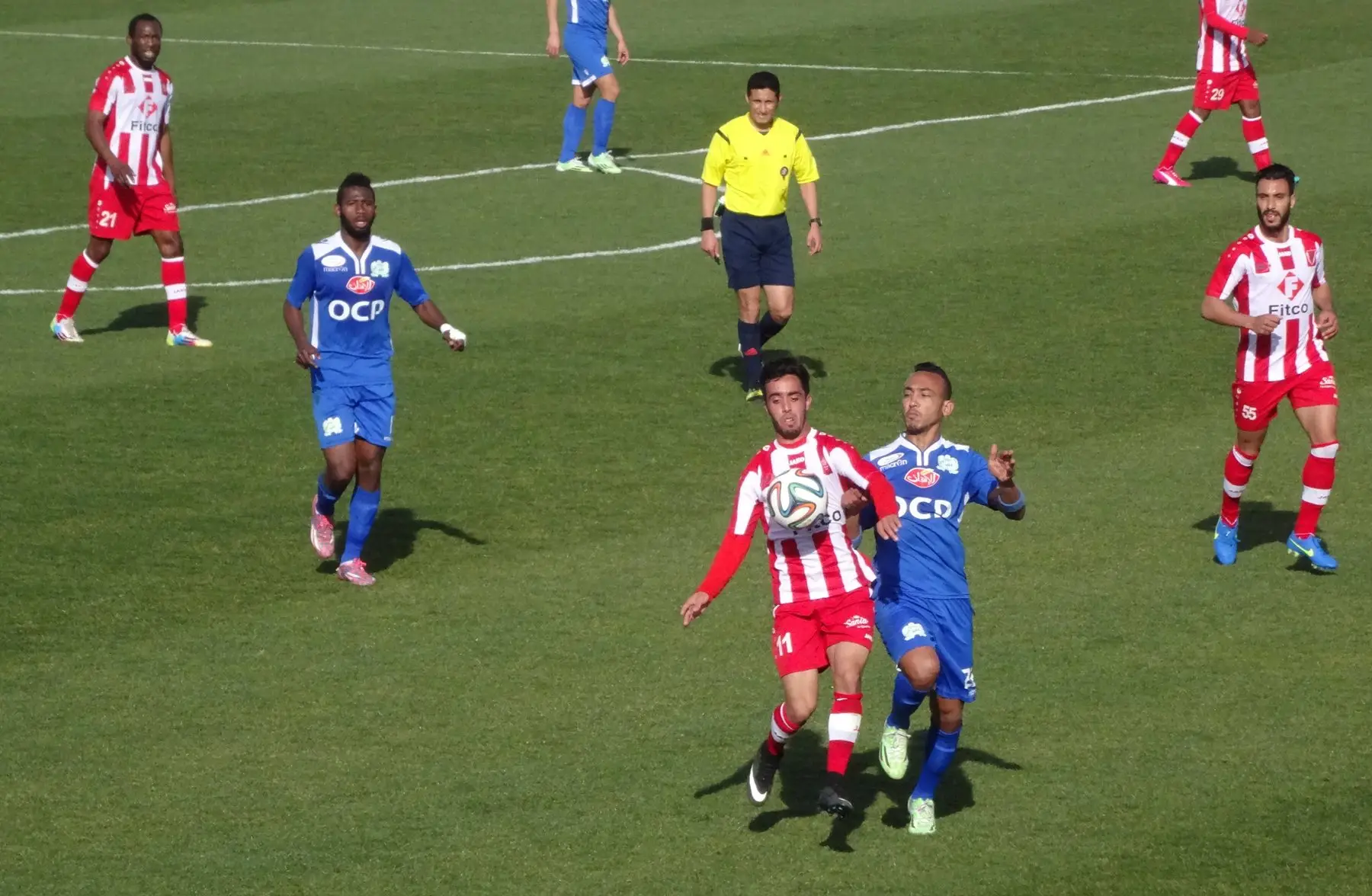
The return to D1, in 2014-2015, also lasted only one season. The 18 November pitch was relaid in the summer of 2014, and on 1 November IZK hosted Kawkab de Marrakech at the municipal stadium in Kénitra, in front of around 300 spectators (a 1-0 defeat). Fouzi Jamal’s contract was terminated in February 2015, Mohamed Jawad Milani was appointed on 26 February, and IZK finished 16th and last with 27 points. They went down on 23 May 2015.
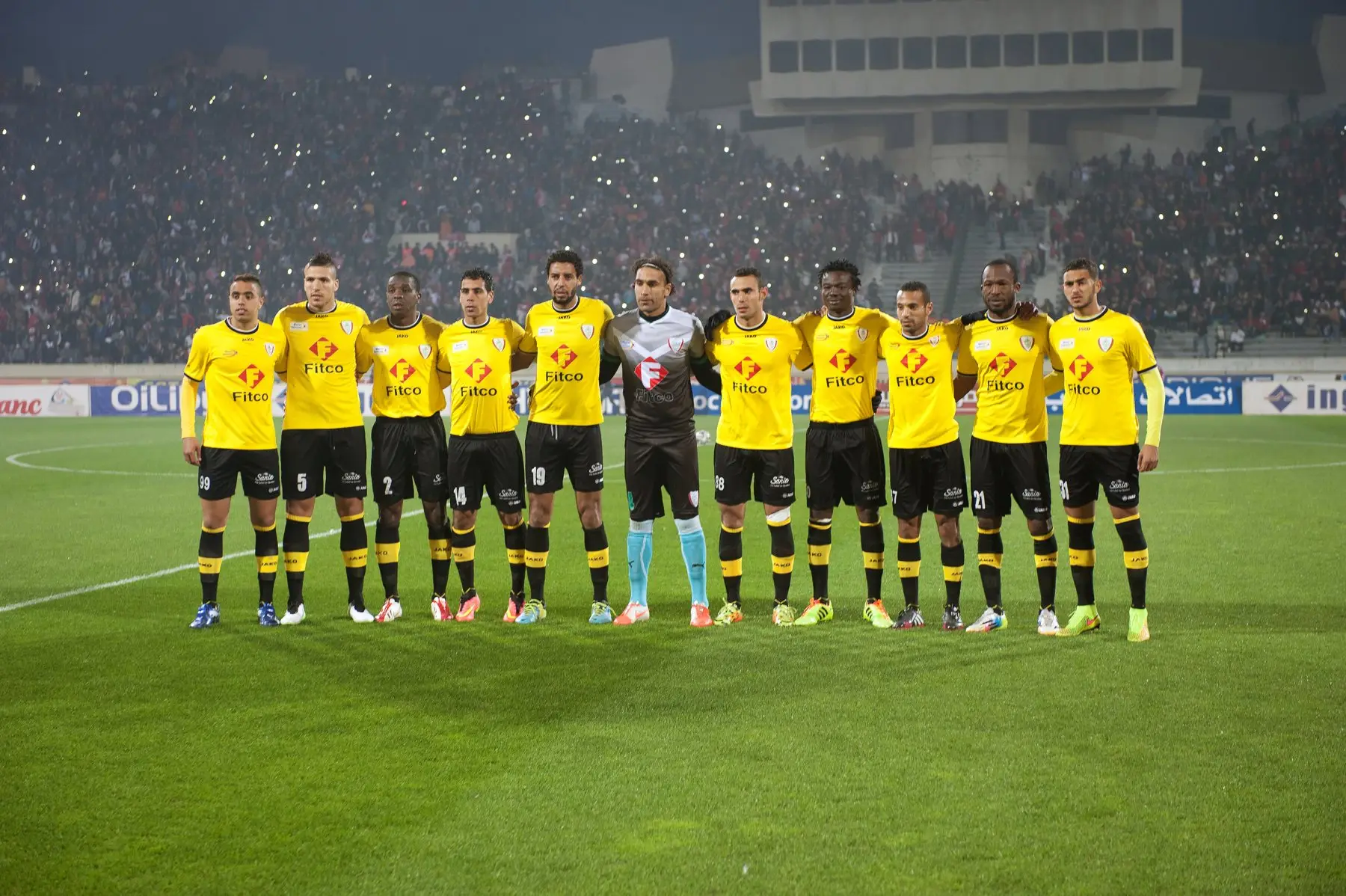
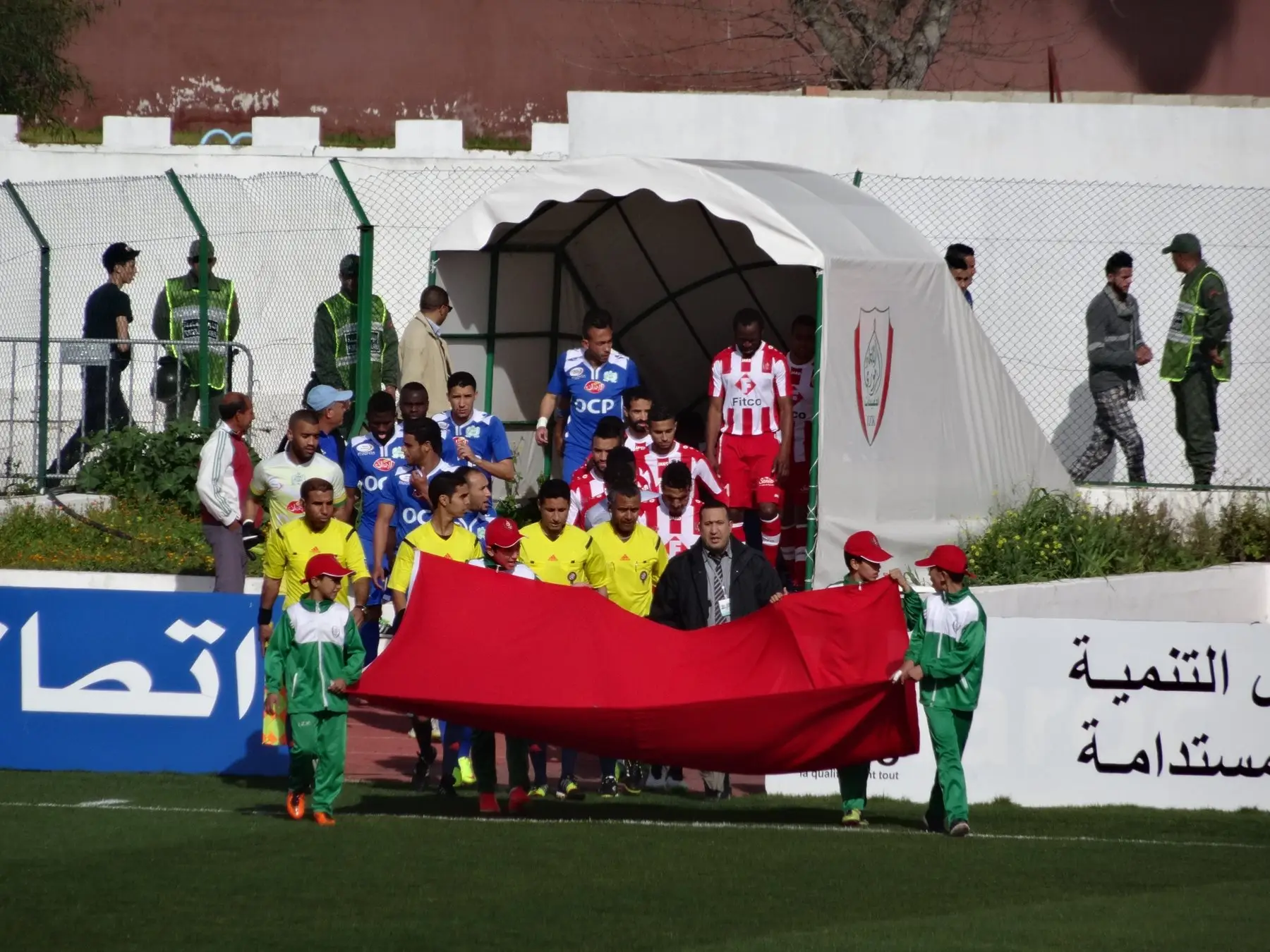
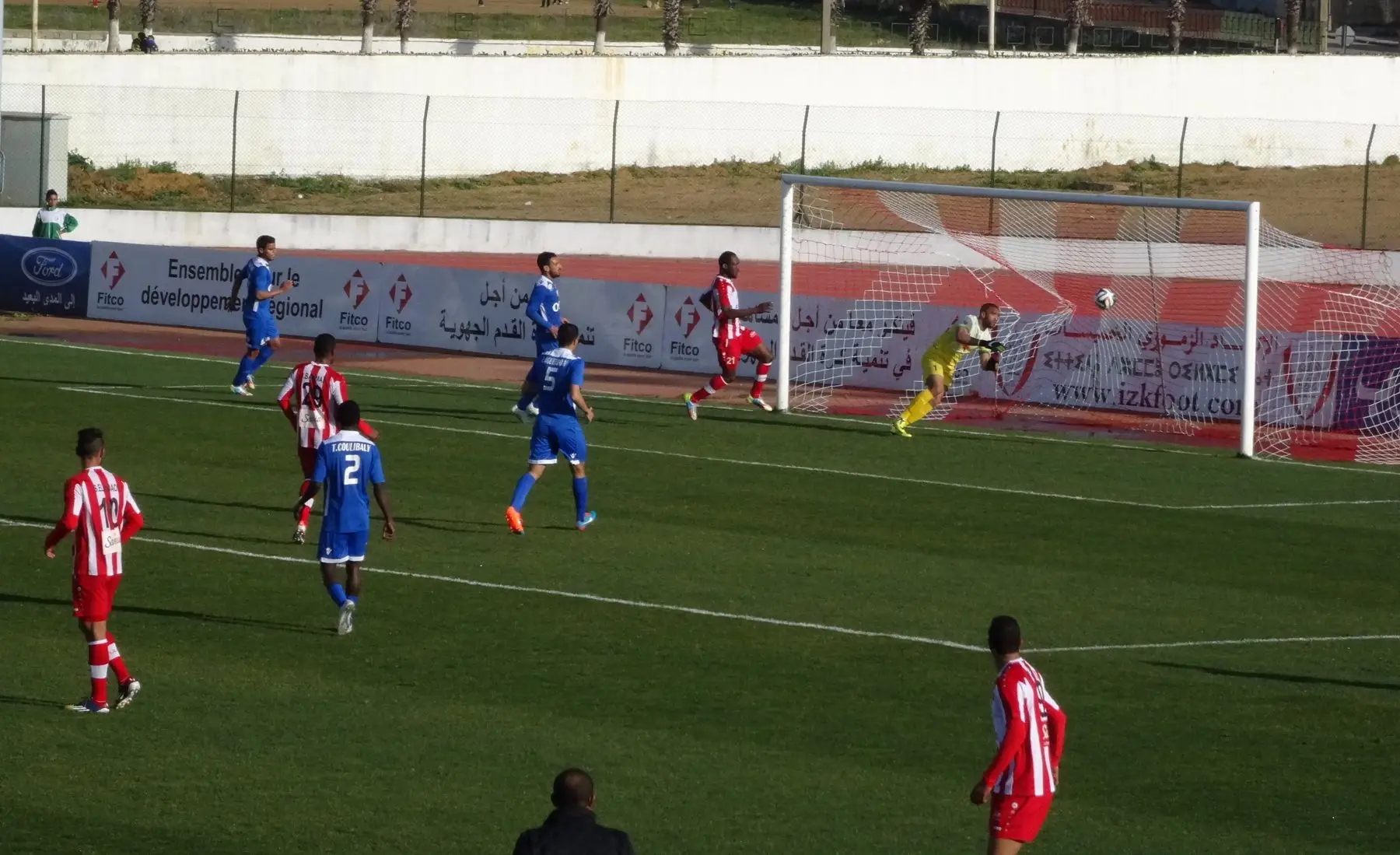
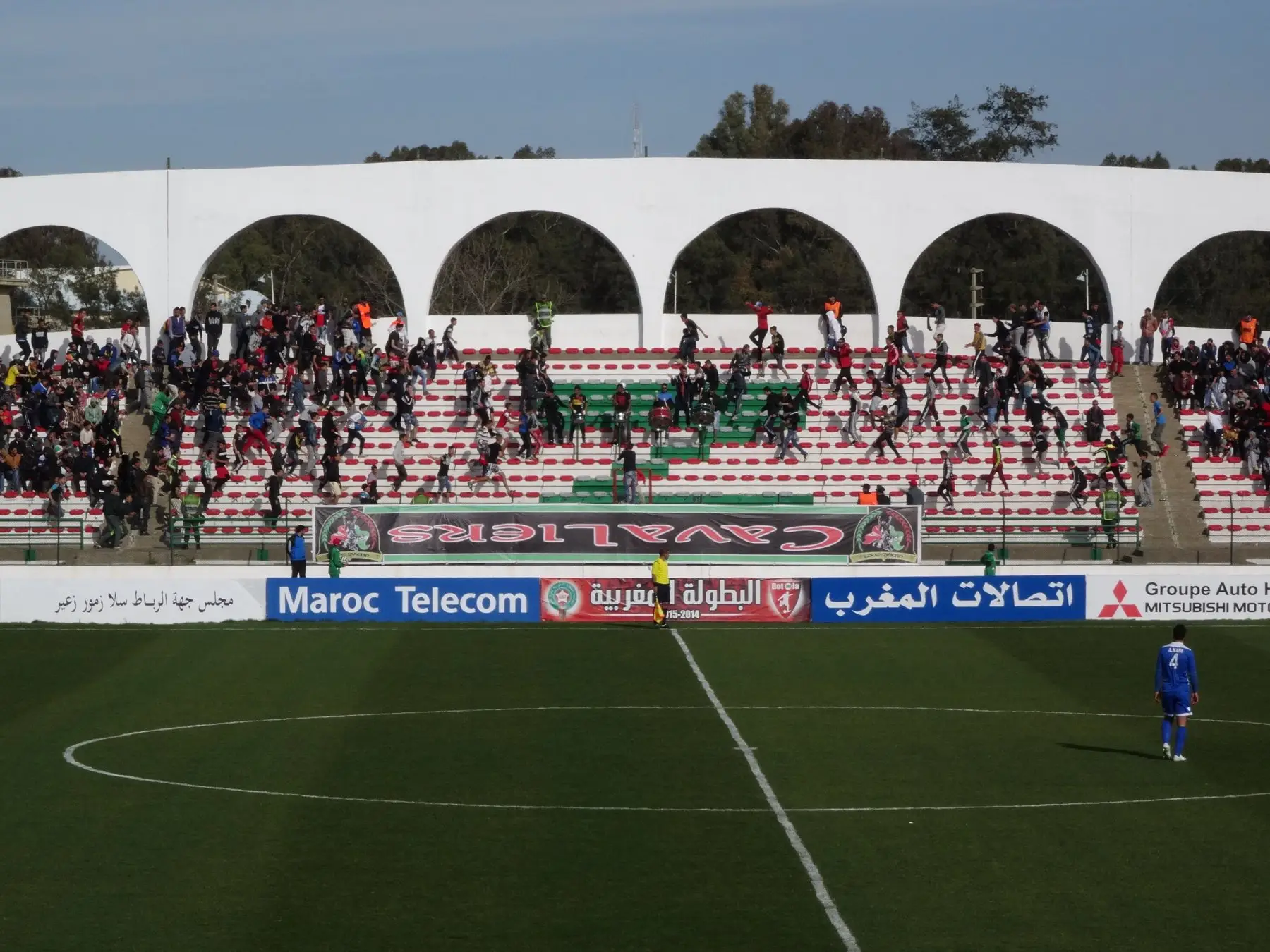
The fall and the climb back
Survival in D2 came down to the final matchday as early as 2015-2016: IZK beat JS Kasbat Tadla 2-0, with two goals from the Ivorian William Togui, and finished 11th, a point above the relegated side. “If IZK had gone down to the amateurs, a lot of families would have ended up on the street,” said Khalid Lamkhantar, who was then coaching the team with Aziz Lagraoui. The stadium was fitted with 37-metre floodlights in January 2016. Cost: 700 million centimes. In the Throne Cup, the 2016 edition took IZK to the quarter-finals, after two 1-0 wins against HUSA, a D1 club, and it was IR Tanger who knocked them out, on 2 October 2016.
Coaches then came and went at a brisk pace, very often three a season. Abdelaziz Kerkache, back in 2016-2017, finished 5th with 44 points. On 1 September 2018, in the Throne Cup, IZK beat FAR 1-0 at the 18 November Stadium in front of more than 7,000 spectators, Marouane Aflah scoring in the 52nd minute: it was in fact their first win over that club in five cup meetings since 1996. They reached the quarter-finals again in the autumn of 2019. TAS beat them 4-2 there, on 23 October. In the league, the team stayed between 5th and 12th place, and Hassan El Filali was elected for four years on 11 December 2019.
Mohamed Bouther, appointed on 2 November 2020, took the team to the top of the table in mid-January 2021, then to 6th place. The 2022-2023 season had three coaches, Karim Benchrifa, Mouloud Mdakker and Fouad Sahabi, and ended badly: on 3 June 2023, on the 28th matchday, two from the end, IZK were relegated to the National, the amateur third-tier league, and they finished 15th with 28 points.
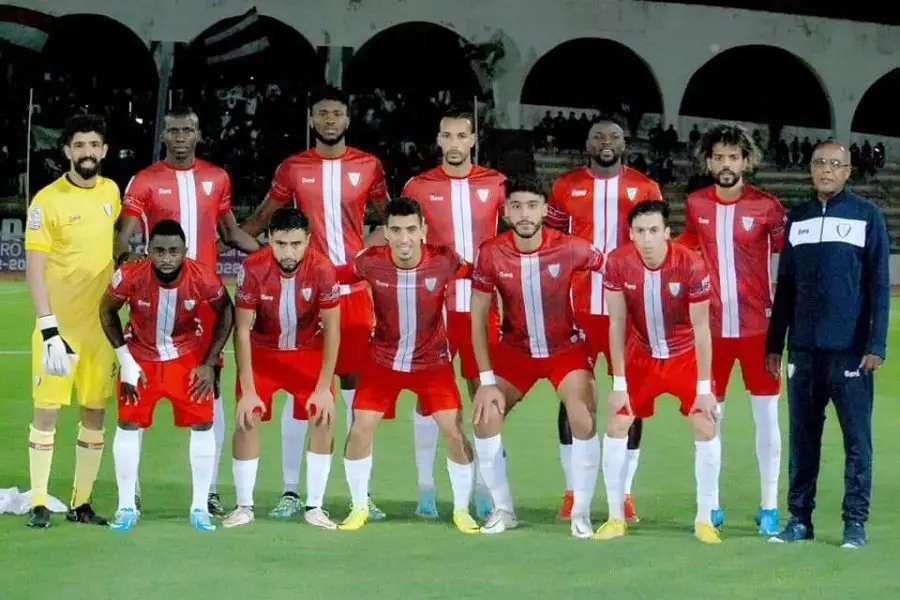
The first season in the National, 2023-2024, was nothing but a fight to stay up, right to the final matchday. IZK finished 8th in 2024-2025, under El Houcine Touta. That season the 18 November Stadium also served as a fallback ground for Botola Pro clubs during the works linked to the Africa Cup of Nations.
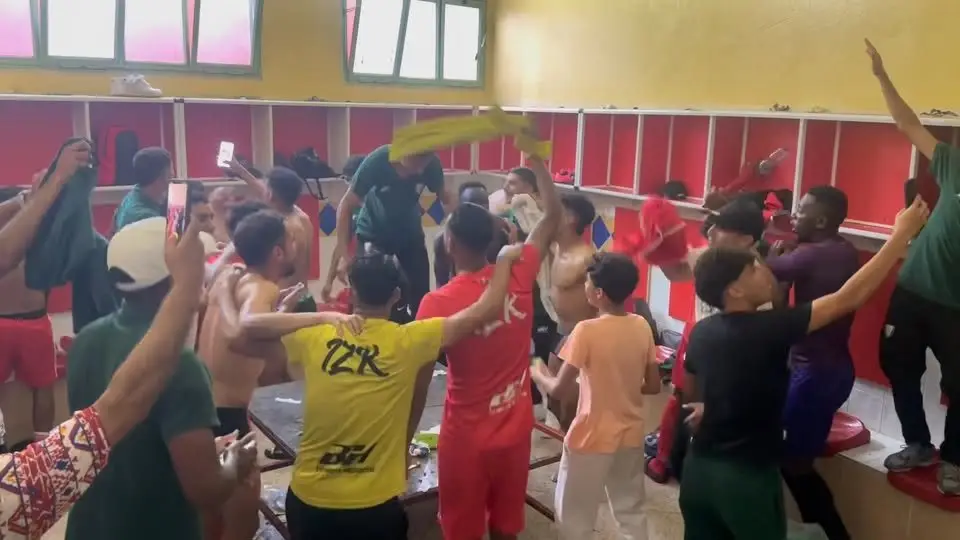
The 2025-2026 season began with Saïd Bahloul, appointed on 30 July 2025, who was replaced by Merouane Kherbache on 28 October. On 7 June 2026, on the 28th matchday, IZK beat OC Youssoufia 1-0, Cédric Elysée Kodjo scoring in the 20th minute, and at last secured their return to D2. National champions with 55 points (15 wins, 10 draws, 5 defeats, 36 goals scored, 23 conceded), a point ahead of OC Khouribga, the club returned to Botola Pro 2 after three seasons among the amateurs, and Kodjo finished as the team’s top scorer with 9 goals. On 25 June, the club announced that Merouane Kherbache’s contract had been renewed for a further season.
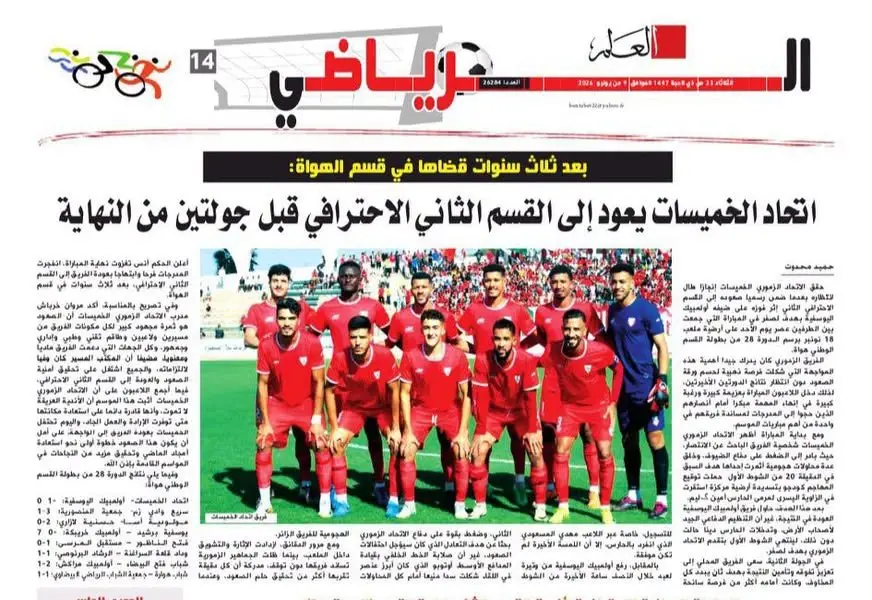
Today
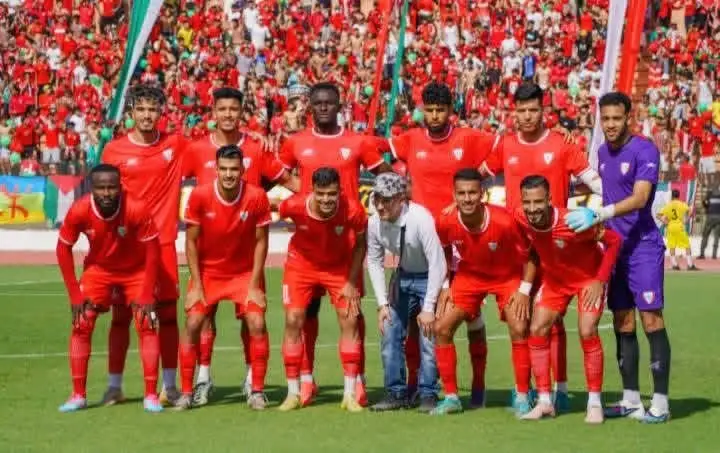
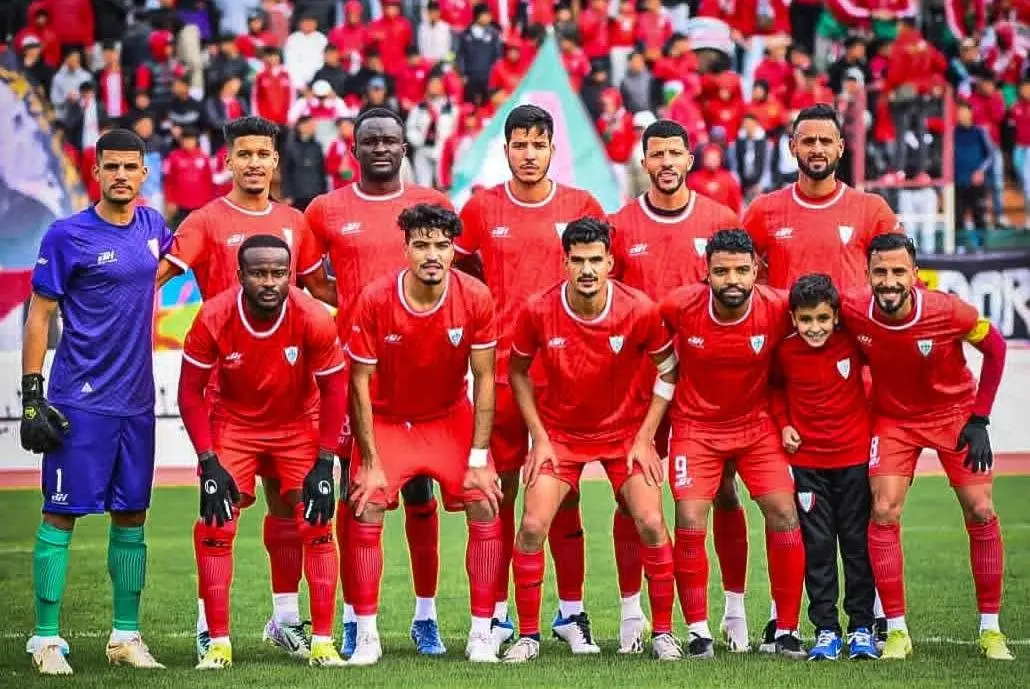
On 1 October 2026, the club marked its “85 years of history”, dating back to 1941, on its social media. IZK have already won their first three Botola Pro 2 matches: 2-1 against CA Khénifra, 1-0 against Stade Marocain, 2-1 against OC Khouribga. As of 13 October, they have 9 points out of 9 and are 2nd on goal difference, behind US Yacoub El Mansour. Next away trip: Safi, on 18 October.
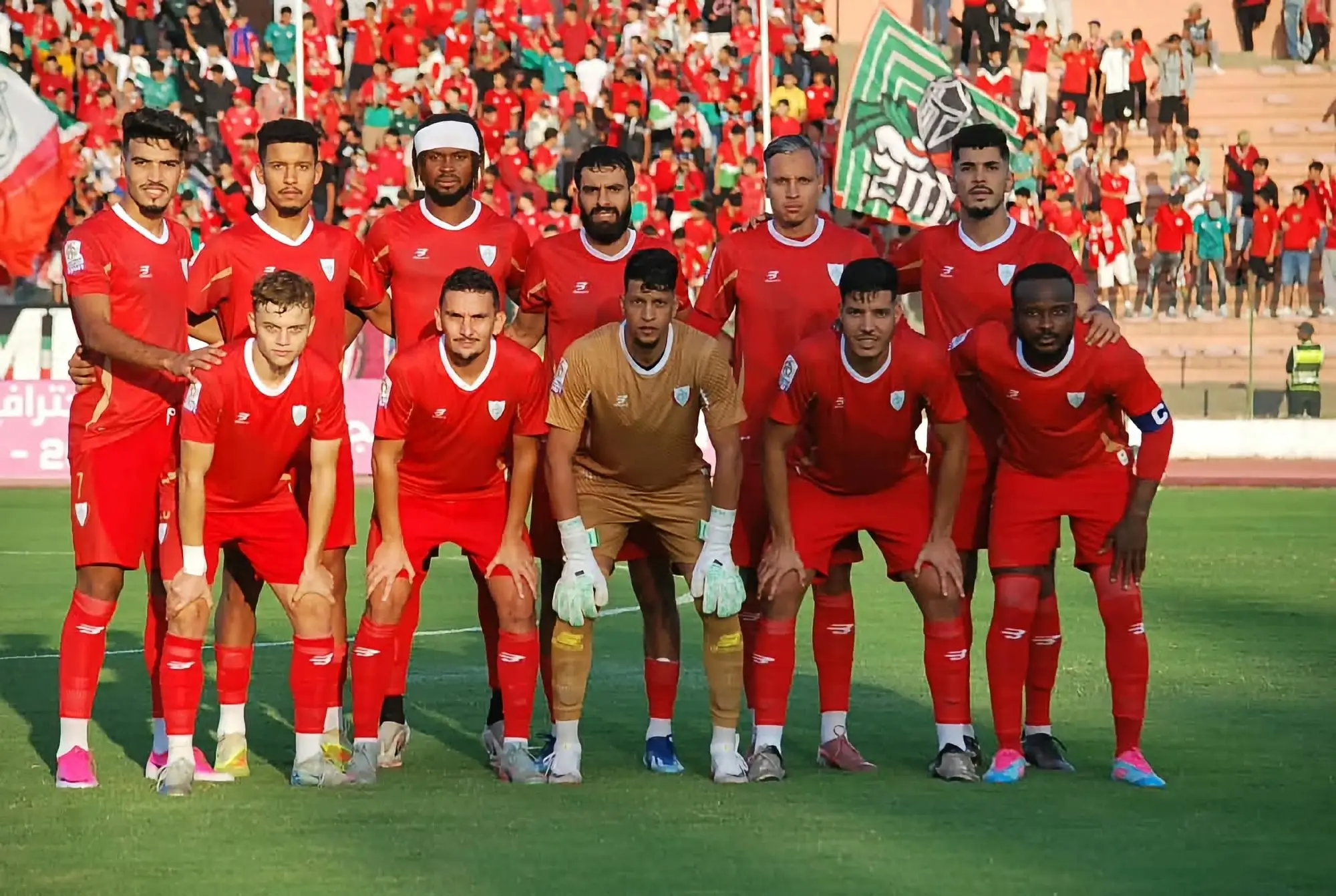
The record of these eighty-five years fits into a few lines. Fourteen seasons in D1: 1972-1973 and 1973-1974, ten consecutive seasons from 2000 to 2010, then 2011-2012 and 2014-2015. Second place in 2007-2008, a Throne Cup final in 1973, two semi-finals, in 1975 and 2009, an African campaign in 2009, a D2 title in 2013-2014 and a National title in 2025-2026.
Main sources
- Mohamed Baïchit, Itihad Zemmouri de Khemisset : toutes les sections sportives de 1941 jusqu’à 2021, Rabat, 2023 (in Arabic).
- RSSSF (Rec.Sport.Soccer Statistics Foundation): Moroccan league tables, Throne Cup, African competitions.
- Moroccan press: Al Mountakhab, Al Mouharrir, Al Ittihad Al Ichtiraki, Le Matin, Aujourd’hui le Maroc, Hespress, Assabah, Alalam, Hesport, Tifelt Press.
- 2M, “Clubs et histoire”, episode devoted to IZK, 9 March 2025.
- The club’s website in 2014, club statements and posts, SofaScore.
Photo credits
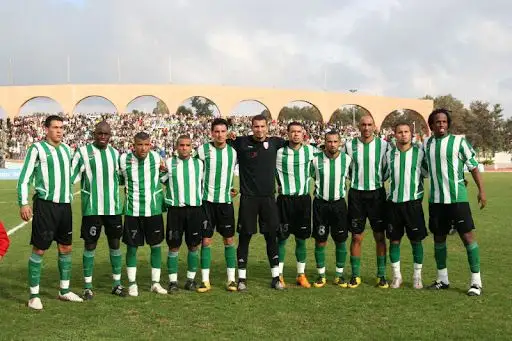
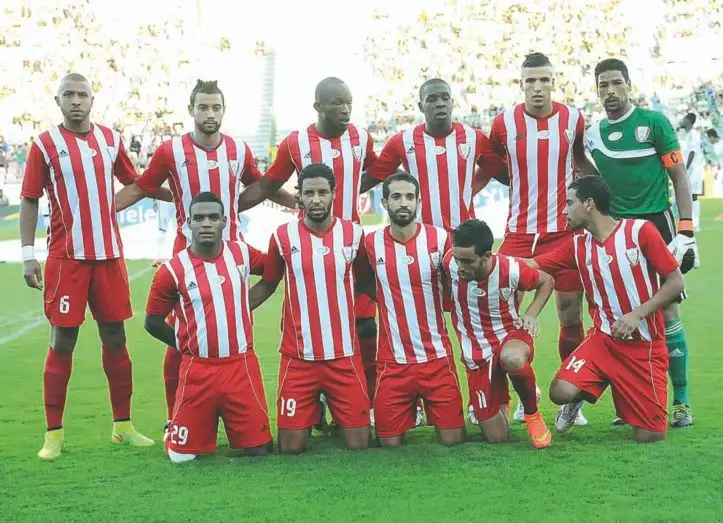
- Mustapha Ennaimi, CC BY 2.0 licence, via Wikimedia Commons and Flickr: Wydad v IZK 2008, 2011 and 2015, Raja v IZK 2009 and 2010.
- Rachid Tirmidi, OujdaCity, 16 May 2011: MCO v IZK.
- Groundhopping Merseburg, Flickr: IZK v Difaâ El Jadida, 28 February 2015.
- KSKB1935, CC BY-SA 4.0 licence, via Wikimedia Commons: 18 November Stadium, 2018.
- Hesport, 3 June 2023; Hibasport and Radio Mars, 7 June 2026; Flach 24 (Facebook video), 7 June 2026; Al Alam, 9 June 2026.
- Archive photos: Facebook page “ارشيف الاتحاد الزموري للخميسات”; 2026 photo: IZK club.
- The club holds to the year 1941. The date of 1 October 1941, given by Mr Chanson, a correspondent for the French press, appears in several presentations of the club; RSSSF, 2M and the club’s website in 2014 give 1940. ↩
- A witness of the early days, the article published for the club’s 80th anniversary and Hadj Hammou El Machatt’s family give the name Union sportive de Khémisset from 1941; the change from Sport Khémisset to U.S.K. is dated sometimes to 1943, sometimes to 1947. ↩
- The suspension is sometimes placed in 1969-1970, the very season of the 22-0; the season without matches was 1970-1971. ↩
- In 2014 the club’s website told of a final for the D2 title won 2-0 against TAS at the 20 August Stadium, with two goals from the left winger Abdellah Ahbachane. Lists of D2 champions give the 1971-1972 title sometimes to IZK, sometimes to TAS. ↩
- There are two versions of who coached the promotion side: Le Matin (2005) credits Mustapha Bettache with the promotion to the first division, while Mohamed Baïchit’s table of coaches gives El Houcine El Hayani and Belaïd in 1971-1972, and Bettache in 1972-1973. ↩
- A results page of the time, reproduced in Mohamed Baïchit’s book, gives a different second scorer for IZK, Hassan, in the 72nd minute; this account follows the RSSSF records. ↩
- Mohamed Baïchit writes that at the end of the 1985-1986 season the team went down to the “second division B”, an amateur division with four groups, then came back up two or three years later under the presidency of Ali Bisbis, with Lahcen Boukhriss as coach; this relegation does not appear in the other sources. ↩
- Other capacities are given for the 18 November Stadium: 10,000, 15,000, or 2,666 seated. ↩
- For 2012 to 2015, Mohamed Baïchit’s book places the return to the first division a year out and gives the coach’s first name as Abdelaziz Slimani; this account follows RSSSF and the press. ↩
The leading figures, with no claim to completeness.
Great presidents 8
1955-1960 Ahmed El Ghazouaniأحمد الغزواني
At the end of the 1955-1956 season, at the request of the Resistance and the Liberation Army, the khalifa Ahmed El Ghazouani, known as “Ahbachane”, took over as president for six months and paid both the players and the travel costs out of his own pocket. Vice-president under Hadj Hammou El Machatt in 1956, he then served as interim president until 1960.
1956-1959 Hadj Hammou El Machattالحاج حمو المشاط
A former player who served during his career as a governor, then a colonel in Civil Protection, Hadj Hammou El Machatt became the club’s first Moroccan president in 1956. As U.S.K. was being confused with Union sportive de Sidi Kacem, he had the name Ittihad Zemmouri registered. The club joined the FRMF in 1957, and Crown Prince Moulay Hassan, at his request, agreed to become its honorary president.
His presidency ended in 1958 or 1959.
1963-1965, 1967-1968 Driss Laabbarإدريس لعبار
The King’s prosecutor in Khémisset, Driss Laabbar was president of the club from 1963 to 1965, then in 1967-1968, during IZK’s first seasons in the second division. He thus succeeded M’barek Belouad, president at the time of the 1962 promotion. He returned to the presidency later, between 1976 and 1986.
Another version has him as president from as early as 1961, aged 32, or from 1964 to 1967.
1969-1976 Mahmoud Archaneمحمود عرشان
A young man from Tiflet and a well-known figure in the national police, Mahmoud Archane became president in 1969 and paid for the team’s travel. Under his presidency, IZK were promoted to the first division in 1972 and played in the Throne Cup final in 1973. He had the 20 August Stadium grassed and put forward the idea of an Ittihad Zemmouri multi-sports club. Removed in 1973-1974, he came back, then left football in 1976.
1980-1985 Hammadi Mazzazحمادي معزاز
Hammadi Mazzaz was president of IZK three times, in 1980-1981, 1982-1983 and 1984-1985, in the poorest years of the second division. No player was paid at the time, and the officials found them jobs at the prefecture or in the local councils. He sold everything he owned for the club.
1986-1989 Ali Bisbisعلي بسبيس
Ali Bisbis succeeded the former player Hamid Tabach and was president of IZK from 1986 to 1989, with Lahcen Boukhriss as coach. Like Hammadi Mazzaz before him, he gave the club everything he owned, in a decade when presidents came and went almost every season.
He brought the team back to D2 after a relegation to the second division B that the other sources do not mention.
1995-2012 Mohamed El Guertiliمحمد الكرتيلي
President in 1981-1982 and 1991-1992, Mohamed El Guertili returned in 1995 and remained at the head of the club until March 2012, the longest presidency in its history. He brought through young players trained at the club and led the 2000 promotion, which he described as “planned over five years”. Ten seasons in the first division followed, along with 2nd place in 2007-2008 and the 2009 African campaign, before the crisis that followed relegation in 2010.
His last term began in 1995 or 1996.
depuis 2012 Hassan El Filaliحسن الفيلالي
Originally from El Bahraoui, president of the local council and then of the provincial council, and a member of parliament, Hassan El Filali took charge of the club in April 2012, with an interim committee recognised by the FRMF. Re-elected in 2017 and 2019, he also sits on the FRMF board. His tenure covers the 2013-2014 D2 title, the drop to the National in 2023 and the 2025-2026 National title.
Great coaches 9
1960-1969 Mohamed Khalefمحمد خالف
The bursar of the Lycée Moussa Ibn Noussair, Mohamed Khalef was IZK’s recruiter, official and coach all at once, from 1960 to about 1969. He led the club’s first promotion to the second division, in 1962, with M’barek Belouad as president. From 1967, he even arranged for some players to eat at the school’s boarding house.
A 1967 photo names him Mohieddine Khalef, “the Algerian coach”.
1967-1970, 1973-1975 Belaïd Essaghrouchniبلعيد السغروشني
Assistant to Mohamed Khalef from 1967, Belaïd Essaghrouchni coached IZK in 1969-1970, the season of the 22-0 in Oujda and first place in the D2 North group. He returned for the second season in the first division, in 1973-1974, then led the team to the Throne Cup semi-finals in 1975. He is one of the coaches who stayed longest at the club.
1971-1973 Mustapha Bettacheمصطفى البطاش
Mustapha Bettache was the coach for the 1972 promotion to the first division and for the club’s first season in the top flight, in 1972-1973. That season, IZK finished 10th in the league and, on 22 July 1973 in Agadir, played the only Throne Cup final in their history, lost 3-2 to FUS.
Another version puts El Houcine El Hayani and Belaïd on the bench in 1971-1972, with Bettache arriving only in 1972-1973.
1991-2004 Hassan Moumenحسن مومن
A product of the club, Hassan Moumen was called back to the bench on four occasions: in 1991-1992, 1995-1996, 1998-1999 and 2003-2004, a season of narrow survival. Technical director in 2006-2007, working with Houcine Ammouta, he returned in 2020-2021 as general supervisor, alongside the coach Mohamed Bouther.
Some sources also have him as coach from 1989 to 1991 and in 1996-1997.
1996-2009 Mohamed Boubadiمحمد بوبادي
A native of Khémisset and a former player of the club, Mohamed Boubadi was the coach for the 2000 promotion, secured on 10 June in Salé with a 0-0 draw against Union de Sidi Kacem. He coached IZK several times between 1996 and 2009, and was on the bench in Sekondi on 15 March 2009 for the first African match the club played.
2002-2003, 2005-2008 Houcine Ammoutaالحسين عموتة
Back at the club on 31 October 2002 as player-coach, Houcine Ammouta became head coach in 2005. He led IZK to the Throne Cup quarter-finals in 2006, then to 2nd place in the league in 2007-2008, the best finish in the club’s history, which opened the way to the 2009 African campaign. He left the club in June 2008.
2010-2011, 2016-2017 Abdelaziz Kerkacheعبد العزيز كركاش
Abdelaziz Kerkache took over the team at the start of 2010, in a season that ended in relegation. He brought it back to the first division as early as 2011: on 22 May, a 0-0 draw with USM Aït Melloul, in front of around 12,000 spectators at the 18 November Stadium, secured promotion. Back in 2016-2017, he finished 5th in D2.
2013-2015 Fouzi Jamalفوزي جمال
Fouzi Jamal replaced Samir Ajam in mid-September 2013. On 18 May 2014, on the 29th matchday, IZK won 1-0 away to Rachad Bernoussi to secure promotion, then took the D2 title on the final day, with 57 points. His contract was terminated in February 2015, during the season in the first division.
depuis 2025 Merouane Kherbacheمروان خرباش
Merouane Kherbache replaced Saïd Bahloul on 28 October 2025. On 7 June 2026, IZK beat OC Youssoufia 1-0 to secure their return to D2, then finished as National champions with 55 points, a point ahead of OC Khouribga. On 25 June 2026 his contract was extended by a season.
Milestones
- 1941The club is founded in Khémisset
- 1956Hadj Hammou El Machatt becomes president and the club becomes Ittihad Zemmouri
- 1962First promotion to the second division
- 1972First promotion to the first division
- 1973Throne Cup finalists
- 2000Back in the first division after twenty-six seasons
- 2001King Mohammed VI opens the 18 November Stadium
- 2008Runners-up in the league, the club’s best finish
- 2009CAF Champions League, then CAF Confederation Cup
- 2014Second division champions
- 2026National champions, back in Botola Pro 2
The club’s values
Excellence
Aiming for excellence on and off the pitch.
Community
Belonging to Khémisset and to the whole Zemmour region.
Youth development
Making young talent a priority.